
0:05:40
Creating an Inclusive Django Community with Kenya Phelps
Published July 15, 2026
DjangoCon US 2026
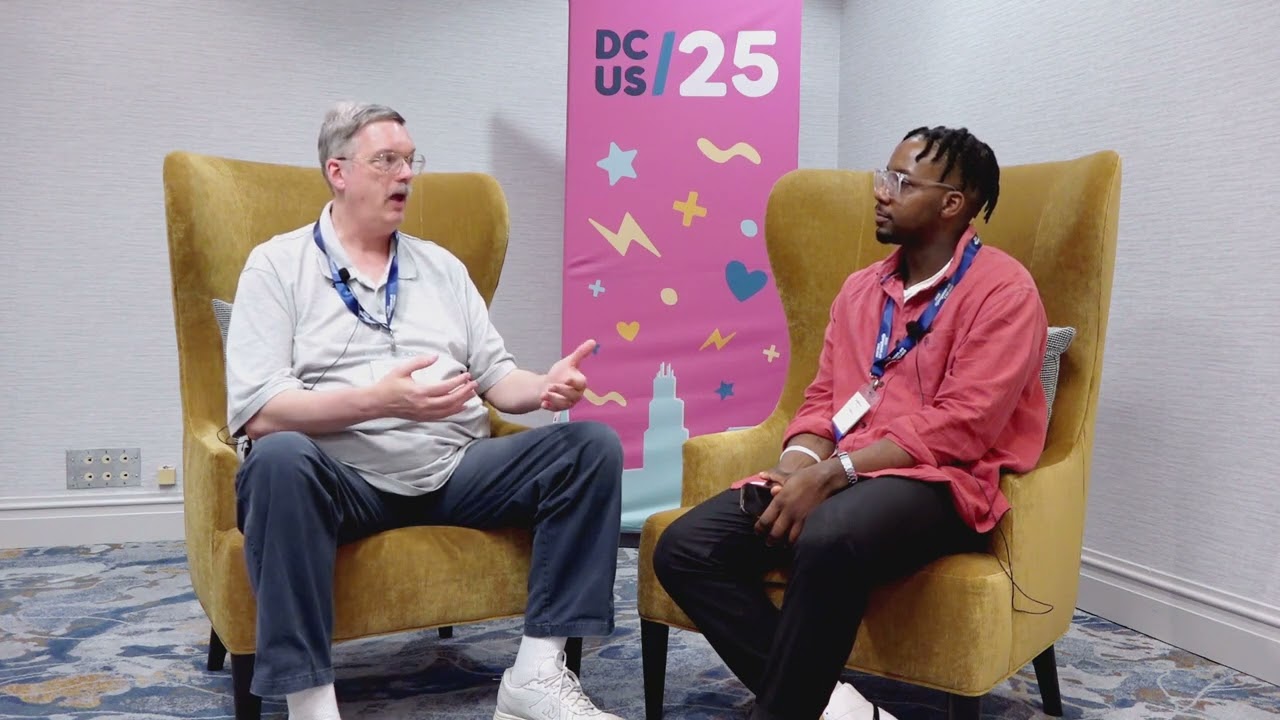
This video features Deb Nicholson at DjangoCon US 2023 in Durham, North Carolina, USA.

This talk is a love letter to meetups. We'll cover how meet-ups fit into our larger ecosystems, what we could work on collectively to support each other, and maybe even make a plan for saving the world -- one meet-up at a time.
This talk was presented at: https://2023.djangocon.us/talks/meet-ups-a-grand-vision-for-a-humble-endeavor/
LINKS:
Follow Deb Nicholson 👇
On Twitter: https://twitter.com/baconandcoconut
Follow DjangCon US 👇
https://fosstodon.org/@djangocon
https://twitter.com/djangocon
Follow DEFNA 👇
https://www.defna.org/
Video production by the presenter and DjangoCon US 2023 volunteers.
Deb Nicholson argues that meetups are one of the most powerful ways to build software communities: they help people learn, make friends, find work and support, and sometimes form lasting personal connections. Their local, low-cost, human scale makes them an effective entry point into Python, Django, and open source, while allowing each community to adapt its format and topics to local needs. She calls for meetups to share resources and ideas, adopt welcoming practices and codes of conduct, support open source broadly, and give organizers enough help to delegate and take breaks. The Python Software Foundation can provide fiscal sponsorship and back-office support, and Nicholson wants stronger year-round connections among meetups and a flexible approach to rebuilding after the pandemic.
Summarised automatically from the transcript.
Automatically transcribed, so expect mistakes in names and technical terms.
Speaker 1: So my name's Dib Nicholson. I'm the executive director at the Python Software Foundation. And I love meetups Meetups are actually how I got involved in the Python community in the first place. I think they're really cool. I'm not much for self-help books, like in a traditional sense, but I do believe that meetups change lives. Uh they are just it's anyway, I am gonna talk so much about how meetups could change lives. Uh first of all, you can learn new things. You learn new things that you didn't know but even know that you could learn. You'd learn about like uh tools and frameworks and data structures that you didn't even know existed. Another thing that's pretty awesome about meetups is uh you make new friends
Speaker 1: Uh and it's kind of famously hard to make friends as an adult. This one says that being an adult means you have a total of three friends. They all live in different parts of the country and periodically you just send each other videos of weird dogs and say, this made me think of you. I'm not saying we can't send videos of weird dogs. We should totally do that, but we should also write some code and maybe contribute to some open source communities along the way. And then you might have more than three friends I'm looking at this room. I think that a lot of the folks here have more than three friends here. So meetups and open source communities work. The other thing that is I think life-changing and amazing about meetups is that people find new jobs. Sometimes they find jobs that they didn't know existed before, like, oh, you can You can get paid for that?
Speaker 1: I had no idea. That is amazing. Or you make connections and someone's like, oh, I have an opening at my company and we've been doing this meetup together for a long time. I would love to just have you come on and work for me Uh it's it's amazing. So if you have like instead of having to like go out and put yourself out there on LinkedIn, which people are using again now, I guess, because X is not so cool, but um It's much better to meet people in person that want to hire you. Some people even find support to leave their old lives uh lives that weren't serving them either like financially or intellectually or emotionally, uh, or weren't providing the safety and dignity that I think every person deserves. And so when I say life-changing, empowering, uh, I
Speaker 1: I have fully drunk the Kool-Aid on meetups And then this one, we don't advertise this and we certainly don't guarantee it. But some people even find the love of their life at meetups I know of four small human beings that exist because their parents met at a meetup. And so I just I just think that's amazing. that people find that kind of like connection in their local community. They find their purpose like Abigail was talking about earlier. So yeah, the secret, it's meetups. So uh so meetups are great for you, uh but as the executive director of a global like kind of software community, uh meetups are actually really great for us too.
Speaker 1: because they are our best community entry point. So MENAS provide this like nice safe landing zone for people to come into like what is often like really kind of a massive amount of information. I don't know if you've looked at the PSF website, but it is a lot. Meetups are high touch. That's sort of like a marketing term that means people get individualized detention. I'm not sure why we let marketing people describe uh hanging out and meeting individuals in person, but that's what it means. It's a really effective way to make a good impression. So instead of sifting through like page after page or repo after repo to look for the thing that you want or the thing that is interesting to you
Speaker 1: Someone in person comes up and says like, hey, welcome. What brings you here? And then you can tell them and they'll say like, oh, AI, you should go talk to Jerome and Sarah over there. They cannot stop talking about AI you have now immediately found the people that you want to talk to. And everybody's flavor or good stuff uh that they want to find in a technical community is a little bit different. And so This this place where you can go and someone might even be like, oh, you actually might even want the other meetup that happens on the opposite week. Like, welcome to the Python meetup, but maybe you wanted the Django meetup. Who knows Uh but an actual human being is going to be able to tell you that in a much more effective and friendly way than not finding the page you want on a website
Speaker 1: or not finding the repo that you want or not getting an answer to an email that's been put on a website for 20 years and is so full of spam that nobody can bother to answer it anymore because it makes them cry. So go to meetups. Munis are also local and responsive, which is amazing because they can cater to the town or the village or the city or the campus that they call home. And they can choose a meeting place that's inside or outside or online or hybrid, depending on what folks in their area want or find convenient or what the weather makes feasible. for them. And then can tailor topics to the folks in their area. So I mentioned earlier that the Boston Python meetup is my home meetup. But it takes place in a town with a lot of scientists and engineers.
Speaker 1: So data like big data is big Skills for folks who only program as like a small part of their job is a huge thing. We're always talking about Jupiter Cities without a lot of local jobs might focus more on remote job opportunities. Meetups that play take place on a campus might focus more on fundamentals or how to get your first job or how to start networking. And meetups in a rural or spread out community might choose to meet mostly online or always hybrid or itinerantly moving from place to place because otherwise the same folks are always driving four hours to get to their meetup And that's what's amazing, each local meetup gets to make that choice. It's also a low threshold to entry compared to maybe flying 10 or 20 hours to come to a conference in a whole other continent.
Speaker 1: Um mutes are pretty chill because they're mostly near your home or they're where all the offices are in the place that you live Um, they're open to the public and they're nearly always free to attend. And some are even on Zoom. It's pretty hard to get more convenient than in your house and you don't have to put on pants. So um, so that's like uh like that's kind of what nonprofits are always thinking about like how do we build our community and bring more people in and a lot of those ways that we might consider doing that are like, oh, well, how many people's airfare do we want to pay to have them come to PyCon US? So that's like a a huge amount of work and a huge amount of money. Whereas meetups are like, show up for free. We're down the street or in your house.
Speaker 1: I also think that uh meeters have an amazing amount of potential, uh, especially when coupled with a global software community that they can plug people into. And so meetups can help us build more diverse communities. We can uh go to places that uh we wouldn't be able to go and have no business going like uh I have work to do in the office. I can't attend every single meetup that happens around the globe, nor should I. We uh you know we look at how uh communities evolve and it's Instead of us saying like do it this way, meetups are like, we're doing it this way. We asked people what they wanted, we brought them in, and this is what they want.
Speaker 1: So it's it's a kind of uh that sort of like big kind of overarching thing, but with the small ones that plug in. allow us to kind of maintain that like a diverse set of experiences for people's entry point. I would say that uh meetups can also help us share community news or find out like kind of how things are going. So We can share things about like what's going on with Python, new releases, bugs, patches, et cetera, things that are coming down the pike that people might want to pay attention to, like meetups might choose to have conversations about the gill and whether that's awesome or terrible. Uh they probably already are and they just haven't told me yet.
Speaker 1: And they can help us share other kinds of community-wide news, like about events and grants and travel grants, job opportunities and Python and Django, or paid internships, and you should absolutely pay interns. Meanups can also tell us what the community needs. So they can tell us what kinds of skills people are seeking What kinds of technical topics people are asking for more information on? What kinds of speakers are filling the rooms so that we can see like Oh, that kind of approach or that level of approach is what people want. That's what they are looking for. That's what they're seeking when they come to our communities. Uh and what about some of the things that are annoying about running a meetup? Like we want to hear about it because uh if it's something we can fix, then we would like to try and fix it
Speaker 1: because uh I think We we might tend to take the meetups for granted because they happen without us, but uh but I don't want I have had a lot of conversations with folks already here about um meetups that sort of like lost a little of their uh energy and momentum during the pandemic and the lockdown and they're like, oof , it kind of just became a lot uh and we're like, oh, if there was something we could have taken off the to do list to keep the meetup going, we would like to know what it is 'cause we we want you to be able to take breaks. Like we value meetup organizers, but we don't want you to like never sleep. and feel like you have to be like, you know, putting in thirty hours a week just to have people hang out for two hours once a month.
Speaker 1: So if there are ways that we can make that easier for people than we want to. And we want to learn about like uh what kinds of topics are interesting to different communities Like do people want to learn how to network or do they want to learn how to find remote jobs? Or what kinds of projects are employers looking for on your GitHub repo that is going to help you get a job? So like all of those kinds of things, helping us learn more about how people learn and maybe some of the places where we could improve our documentation for newcomers, we would we want to hear about that. Uh and meetups are a great place where people are sitting together, sometimes reading the documentation and being like, mmm, I have some thoughts.
Speaker 1: Please share them. I want to hear them. Maybe after your part where you're angry about the documentation, but then share it a little bit later when you're like I have some helpful comments. I'll take the angry ones too, but it's nice if they're sort of a good ratio. Anyway, so I want to think of meetups as like a craft, like a thing that we do as a community that we want to be good at. We want to be good at delegating. Maybe not uh so much of the magic. We're writing it down, we're making sure that people actually know what's going on and they feel good about it. Um, and that uh it's something that we teach each other how to do. So if you're a meetup organizer and you're like, wow, I have been that thing she mentioned about 30 hours a month to get people to hang out for two hours, like
Speaker 1: That sounds like me. Um, I want to help you figure out how to delegate and how to like get more organizers in and give some of that work away and spread it out so that your communities are still there even if you want to like Go on vacation or take a break or you know have a baby go to grad school, any of these things that um you know people do in their lives when they are taking a break So uh part of that craft, I think, is shared values and thinking about like Hey, we want to make sure that all of our meetups are welcoming and that it's uh the communication is two-way. Like, hey, we we want to be welcoming and somehow we're Still not getting new people, like
Speaker 1: maybe uh we can help you with that, or maybe another meetup can help you with that. But we want the experience to be not the same because every single meetup is different, it's topics are different and the the places they choose to meet are different, but the feel of like, hey, a new person, awesome. That should be every single meetup, right? Um and so uh and it's and codifying that and making it really specific. So we want all of our meetups to be welcoming, we want all of our meetups to be figuring out how to help new people come and stay and feel comfortable. We want to make sure all of our meetups have a code of conduct. Obviously that's sort of just like table stakes to make sure that people feel safe and that if something goes weird
Speaker 1: that it won't be suddenly the whole room is like, well, that happened to you. Instead we want to make sure people feel like everyone's gonna be like, oh no, no, no, no, no. That we don't do that here, as Kojo said this morning. And we want to make sure that all of our meetups are promoting open source. Like Python, Django, amazing, but there's also like a whole world of open source out there. that you could use for your work or for um you know your squirrel projects that you do as a hobby on a weekend, um any kinds of stuff. But like there's a ton of open source out there And there are things that affect the open source community as a whole that, you know, because Python and Django are part of the open source community, also affect us. And so we should be part of that conversation.
Speaker 1: We should be aware of being part of the open source community. And when someone's like, well, this, I have this opinion about open source, and it's like, huh, that might be us. It could be. Or it could, you know, sometimes people are wrong, you know how the internet is. But um but I want like kind of that shared set of values and that like to be like two-way in in conversation with us and with meetups. The other thing I think that's interesting is that meetups can help each other. So like I talked about sharing all these ideas that I have, we have, the PSF has, or people in this room have. But uh meetups can share ideas with each other. So like if your meetup is like, oh, we have a lot of people sign up, but then we get a lot of no-shows. Like maybe another meetup
Speaker 1: is like Oh yeah, that was happening to us last year. Here are like two things we tried. And that other meetup might be like, oh thank you. Now we like at least have a plan or an idea of what to do. Or maybe it's an idea for programming like Puzzle Night, tell me more about that. How did that work? Like mock job interviewing? Did people like it or was it weird? Like how'd you set it up? Or like, uh, hey, we're having trouble finding venues, we're having trouble finding sponsors, we're having trouble finding speakers. Like every single meetup looks at those things and has ideas that could maybe help another meetup that has run out of their own ideas. So we want to make it easier for meetups to share ideas with each other and to pull resources. So we just brought in BAPIA, which is
Speaker 1: This collection of meetups in the Bay Area of California and they pool a lot of resources. But as more meetups come in Uh that might be possible for other areas to do too and be like, oh, we have a little kit, like some A V stuff. We have like this, you know box of like uh name tags and we have a like a good pizza joint where we're getting points and stuff like that. So pulling those resources or maybe somebody's got like Oh, I know an author and uh he's always willing to donate a bunch of books or she's always willing to give us like all of the, you know, first edition, like signed and you know, we could we could get her hooked up with you too. So I want meetups to be able to share with each other and maybe recommend other meetups.
Speaker 1: So like we as mentioned earlier, like maybe someone shows up at a Python meetup, but what they really want is a Django meetup. Or maybe they drive from Providence to Boston, which is an hour if the traffic isn't terrible that day. Um, and you might say like, hey, actually did you know there's a meetup down there, like near your house you could go to Or maybe someone's like, I really, you know, this has been really great, but it feels super high level and be like, oh, there's actually like a PyLadies meetup that is super focused on fundamentals and they meet on Thursdays instead of Tuesdays So I want meetups to be like recommending each other and saying like, oh, if you didn't find what you wanted here, like maybe try a different one. Or like when you move, it's like, man, I'm gonna be so sad. I'll I'll just never go to a meetup again. And it's like, wait a minute, where are you going?
Speaker 1: There's one in Philly. You're fine, you're set I'll make an introduction for you. So I want uh us to like kind of think of ourselves as like all on the same team and recommend each other. So I'm gonna get really specific and then I'll take a couple questions Uh meetups in the PSF. So currently the Python Software Foundation acts as a fiscal sponsor for a number of meetups, a couple of large ones like my home meetup, the Boston Python meetup, but also the Philly Pug. Puget Sound, Pimentos, which is in Minnesota, and Bapia, and a couple of other ones. And some of them are struggling to come back after the pandemic. But that means we act as a back office for them. So uh probably the most used thing that our meetups use us for
Speaker 1: is instead of waiting for like a $500 or $1,000 check to come in from a sponsor to your personal bank account and then paying for a bunch of pizza for a whole bunch of people also going out of your personal bank account you can do it through a PSF account that we hold for your meetup Um, it also means you don't get taxed as if you're like a weird person that has a bunch of like, you know, monthly non-taxed income that you just spend on pizza for strangers. Do not recommend if you have been there, please let it get in touch if you're in the US and you need a fiscal sponsor for your meetup. But we can also help with other stuff like oh we had this issue or somebody sent us this 30-page venue contract and it's written in English, I guess, but maybe you could help us with that.
Speaker 1: So We act as a back office to all of our uh all of our meetups that we act as a fiscal sponsoree for. And we have them on our big mega meetup account, as well as like all the Django meetups are on the big mega meetup account So that's something that we do. I don't know how much if Daphne's interested in moving in that direction, we'd be happy to talk about it if you are. But in the meantime, if you want to come over and be a fiscally sponsored at the PSF, let me know. We would like to do more to connect meetups with resources. So we know everyone needs a meetup account. We suspect most of you enjoy having a Zoom account. Um, but there could be other stuff. Like, so uh maybe translations or if we maintained a roster of speakers.
Speaker 1: Or if there was like curricula on certain topics that maybe it costs a lot and you were like, oh, what if we could get a discount through a nonprofit? So we wanna do more to connect meet us with resources that they could use. Not expensive resources. We're not gonna buy a boat and have a Python boat in the middle of the ocean that is only accessible by a helicopter. But if it's not ridiculously expensive, we wanna hear about it. And then finally, um we do a lot of work to make it seem like it's really easy to come to meetups, um, and still sometimes people find it hard. So if you can think of other ways that we could connect people with meetups, maybe advertising, maybe talking to schools specifically, um, you know, or uh Doing a thing where we speak about meetups and match people up with their local uh generalized open source meetups, we'd like to do that.
Speaker 1: And then we want to do more to connect meetups with each other. So one of my favorite conversations uh at PyCon is the meetup of meetups, but that's only once a year. So I would like for us to have that conversation like kind of all year. We used to do it as a mailing list. I know people don't like mailing lists anymore. So If you have ideas on how we could do that better, uh my name is Deb Nicholson and I love talking about meetups. Thank you. You want me to throw stones at Django at the Django con. Okay. Um Well uh I know that Django's been talking for a while about being a little more formal about stuff.
Speaker 1: Um If what's holding you all back is uh lack of a roadmap, uh I've been doing nonprofit work for 30 years. I would be happy to talk with that. uh talk with anyone uh uh DEFNA about that, like how to get to a place where you have staff, um how to uh think about like getting the nonprofit organization up. I don't have any stones to throw about the community. Like this feels like a very welcoming community. We talked about code of conduct. We talked about like being nice to each other. Like I th I don't know if we gave that to you or you gave that to us or we made it together, but it seems to have permeated both sides of the house. So no notes on that.
Speaker 2: Does it work now? Okay. Um I have a question slash comment. I just want to plus one everything you're talking about. So I help run a meetup in Chicago called Shy Hack Night, which is a civic tech sort of tech for public good meetup that I've been going to for God, like 10 years now, which is crazy. And it's like where I learned how to code, and it's my whole career. We also have a couple babies that have come out of Shy Hack
Speaker 1: Night.
Speaker 2: Um and uh One of I'll share one tip and then I'll ask one question. So like one tip that we found for our community like during meetups is like dispelling jargon. Like there's a lot of times, uh especially if you're new to tech or you're showing up. We just use a lot of shorthand. And so we for a long time used to hand out stickers whenever someone would politely call out jargon. So for example, we use Python as the example like If someone is like just in a sentence using the word Python uh and they're not aware that it's a programming language, obviously that can be kind of confusing. Important.
Speaker 1: Because if you're talking about snakes, it's Everything you said is different.
Speaker 2: And you don't want to get in the way of a good snake talk either. Um my question is kind of like how PSF like interacts with other meetups that aren't t just like Python specific. Like we have a lot of Python people. at Shy Hack Night, but it's it's not even a tech-specific meetup. Our presentations are often about social or public good or data oriented as well as web dev oriented. Again, lots of people use Python, but it's not specifically about Python. And so I was curious about that.
Speaker 1: Yeah, uh that's a really great question. Um I mean I know that we do interact like when we bring PyCon US to a town, like we sort of uh reach out to all the meetups in the area, not just The Python ones to kind of like, hey, we're coming. What would you like to see? Would you like to be involved? Like uh, you know, who should who else should we be talking to in your town when we come there? Um, and then uh, I mean I think it's not like we haven't s usually initiated those conversations, but if someone said, oh hey, we're gonna do this thing and I know it says hack on the title, but it's actually like all Python, like Could we could we talk about it? Like we would be up for that. Um we do we're a nonprofit in the US, which means like
Speaker 1: Python is our mission. So we can't like fund stuff that's Pearl, but if someone from another uh you know tech community like Ruby said like, hey, uh can you tell us like how to do a little bit more of the things that like Uh PSF is doing because we are we have noticed some gaps that you all have already filled. And I've only been here for a year and a half, so I didn't fill many of those gaps. They were filled when I got here, um, then I will usually talk to them. Like I want I want the PSF to be pretty friendly with other open source organizations because I do Like in the same way that I believe all of our meetups are stronger together, I believe all the open source orgs are stronger together. This last one I think.
Speaker 3: Last one. Thank you. And then to try re s restarting something after a global pandemic is a different kind of effort again and it feels the wind has gone out of the sails of so many um events.
Speaker 1: Yeah.
Speaker 3: Do you have a sense that Sometimes it seems it will never come back. Do you do what do you feel about that? Do you think it
Speaker 1: um I do think people are coming back? I think some communities are finding that hybrid works better for them and and is enabling people. to attend that weren't really able to attend before. Um I don't know. I guess if you can find some joy in that. Um And I I have heard a lot of like nice stories of I think you mentioned going up to like on a hike and doing a barbecue. So like A lot of meetups have chosen to do like something outside, which they never did before. Um and they they came back. They didn't get burned up by the sun and it was okay. And it was actually maybe lovely, right? So um I I do think uh if your mindset is like let's get it back to way it was before, I think you might be setting yourself up to fail. But if your mindset is like, all right, what's the new reality?
Speaker 1: What what are we gonna do going forward? How are you gonna meet the current moment? Um, then I think you might find a lot of fun ideas and a lot of like people who are hungry and ready to get back to something, even if it's a little different than it was before.
Speaker 3: Thank you.
Speaker 1: Thank you. Thank you. I'm happy to talk about this the rest of the time I'm here, but I'm gonna get off the stage.
Meetups can help people learn unfamiliar technologies, make friends, find jobs, leave situations that are not serving them, and sometimes even find romantic partners or a sense of purpose.
Discussed at 0:22They provide a welcoming, high-touch introduction: someone can learn what a newcomer is interested in and connect them directly with the right people, projects, or even a different meetup.
Discussed at 3:27Each meetup can choose its format, location, schedule, and topics based on local circumstances—for example, focusing on data science, remote work, fundamentals, or online and hybrid events.
Discussed at 5:00Meetups reveal which skills and technical topics people want, what kinds of speakers and presentation levels attract them, and where documentation or newcomer resources could improve.
Discussed at 8:58Meetups should make newcomers feel comfortable, communicate in both directions, maintain a code of conduct, and actively help people arrive, participate, and stay involved.
Discussed at 12:54The PSF can act as a fiscal sponsor and back office, handling funds, sponsorship income, tax concerns, and practical issues such as venue contracts. It also wants to connect meetups with useful shared resources.
Discussed at 18:17The PSF reaches out to local meetups when events such as PyCon come to town and is open to conversations with broader technology and open-source communities, although its funding must support its Python mission.
Discussed at 23:42Organizers should not try to recreate the old meetup exactly; they should respond to current conditions by considering hybrid events, outdoor activities, and other formats that bring people back in a sustainable way.
Discussed at 25:41Note: We understand that names change, people change, and bodies change. We respect each individual's journey and privacy. If you have any concerns about a video or need us to remove content, please don't hesitate to contact us. We will handle your request with care and promptly address any issues.
Published July 15, 2026

Published July 15, 2026

Published July 15, 2026
Published July 15, 2026
Published July 15, 2026
Published July 14, 2026