0:42:14
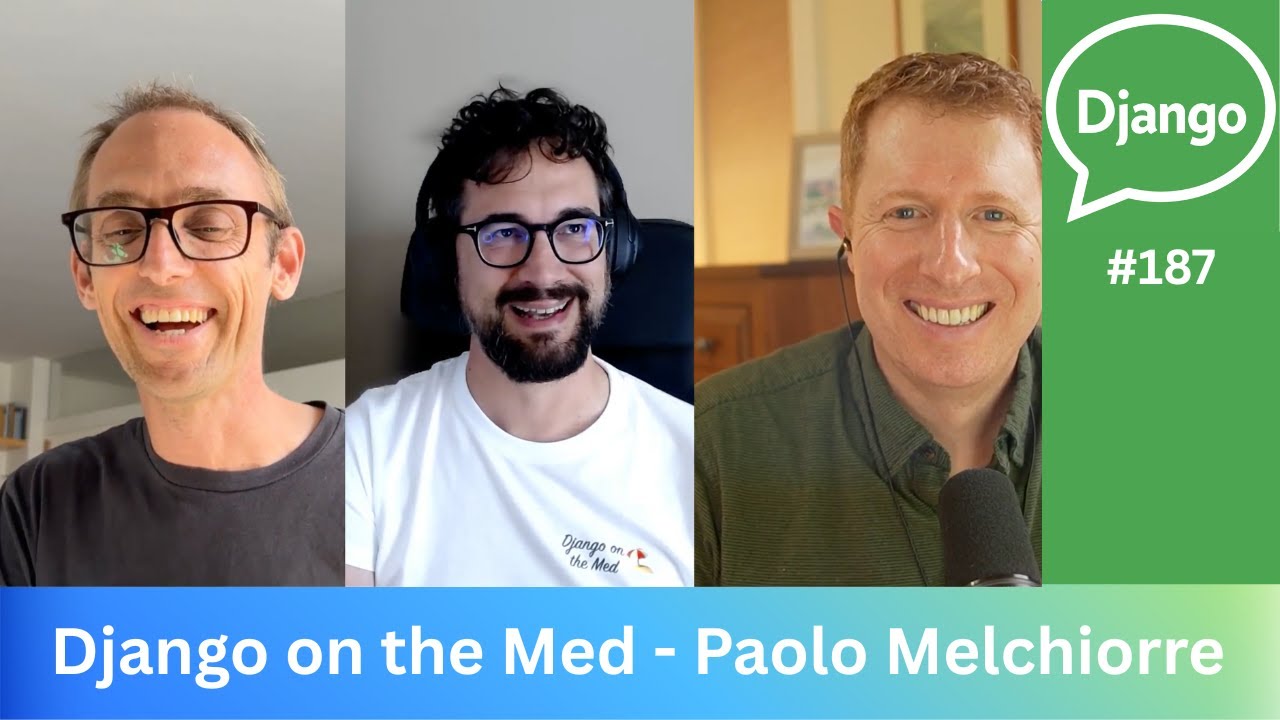
Django on the Med - Paolo Melchiorre
Published October 20, 2025
This video features Carlton Gibson at DjangoCon Europe 2018 in Heidelberg, Germany.

https://media.ccc.de/v/hd-83-growing-old-gracefully-on-being-a-career-programmer-
Software development is often seen as a young person's game. But what if, as you get older, you want to keep at the keyboard? Thoughts from a (now) veteran developer on building your career in software development for the long-haul.
This is a community talk. My favourite topics from DjangoConEU 2017 were the non-technical talks. The most interesting (on-topic) conversations I had were about the non-programming aspects of working in software. I wanted to give a talk on that line.
Prima facie I'm not the best place person to talk about diversity (white, male, etc), but, having been freelance since 2006, with four young children, and now slightly greying hair, I am in a position to talk about how to build a career in software development for the long-haul. Hiring in tech is massively ageist. I want to discuss strategies to handle that.
My target audience is individual programmers (whether freelance or employed) as well as software managers, looking to build and retain a team. (The message for managers is simply that they need to facilitate their employees' careers. This seems obvious but it is worth bringing out.)
The core point of my talk is around the idea that a career is very much a marathon rather than a sprint, and that it needs to be approached in that spirit. (Again, this may seem obvious but it is worth bringing out.)
There are two aspects of this. The one is pace. That to work on software day-in, day-out for 10, 20, 30, 40 years (or more) we need to pace ourselves, to manage our reserves, and to have fun.
The other is that there is noting to be scared of. That expertise which now may seem intimidating is, yes, available to us too. That with 5, 10, 15 years of continued effort we too (yes, us) can be as experienced as whomever, in the speciality we choose.
I bring this out with three points. That we need to:
Be disciplined: The key point is to keep going. We each need to find patterns that work for us and develop them into habits that we build into a routine. The great thing is it doesn't have to be 100 hour weeks. As long as we keep doing it, whatever we do builds up over time. Despite the impression to the contrary, time is on our side. Which leads to...
Be prolific: Do lots, and put it out there. This one seems scary. "I'll never do as much as ..." — but it's an illusion. Do one thing. Put that out there. Do something else. Repeat. Again, the work builds up over time, and (seemingly) all of a sudden, you're in a position of being the expert. Finally...
Be social: And I don't necessarily mean Facebook (unless Facebook is your thing). In whatever environment or medium suits you get out there meet people. (Stretch your comfort zones a bit here.) Share what you've done. Relish in what others have done. Be part of the community. Help build the community.
All three of these are essential. As you get older — all the more as you get older — they allow you to build a sustainable career writing software.
This tale is brought out with stories on finding work, and on choosing clients, and employers, financial planning and job security, on family and free-time, and on the importance self-care. It's part inspiration, part battle-plan.
Carlton Gibson
Carlton Gibson argues that programming can be a lifelong career rather than a brief stage before management, provided developers look beyond the technology bubble and keep asking what comes next. He recommends a sustainable pace built around self-care, family, breaks, limiting notifications and other distractions, and developing useful habits over time. He presents open-source contribution and community involvement as ways to build a visible career gradually, while warning that open source can become exhausting unless contributors set limits and employers fund and support the work. His practical formula is to be diligent, prolific and social: work sustainably, keep making small contributions that compound, and build genuine relationships with colleagues and communities.
Summarised automatically from the transcript.
Automatically transcribed, so expect mistakes in names and technical terms.
Speaker 1: Our next speaker is Carlton Gibson. He'll be presenting on Growing Old Gracefully on being a career programmer. Carlton is the newest Django Fellow. He's a core team member for Django Rest Framework and a maintainer of Django Filter. He plays some Pokemon Go. He's a husband and a father of four, and he enjoys cooking hats and philosophy, but not necessarily in that order. So um and I also I want to to just thank you all for being here and I would also like to go ahead and thank the organizers for putting on such a wonderful conference. So let's give our organizers a round of applause too. Now I'm trying to think if I know any jokes. Does anyone know any jokes? Can anyone tell me a joke and then I will relay the joke?
Speaker 1: Would you like to hear a dirty joke?
Speaker 2: Always.
Speaker 1: A white horse fell in the mud. Alright, that's all I've got. Thank you, Carlton.
Speaker 2: Thank you, Lacey. Hello, can you hear me? Yes? Okay, fine. Now I'm wishing I gave a technical talk. Um okay, growing old gracefully on being a career programmer. I'm going to talk about building a pro career in programming for the long haul. We'll see. To bootstrap that, I'm going to talk a little bit about my career so far. and tell you a l a story about that. With that in hand, we'll then go on and discuss the topic and hopefully I can make some points. It says here in big letters, talk slowly, talk slowly. Um fine, so who am I? I'm Carlton Gibson
Speaker 2: If I want to get serious, I put a doctor in front of that. Here's my avatar. I'm at Carlton Gibson pretty much everywhere. On GitHub, on Stack Overflow, on Twitter. I'm not on Twitter. Python Packet Injects, Reader Docs, or Carlton Gibson. You can find me. I have a micro blog dot blog account, which I'm just Carlton. I post occasionally But who am I? Well, I'm a long-term Django user. I was fortunate enough to go to university, I studied economics, I wanted to be a merchant banker. In my second year I discovered philosophy and became addicted to philosophy. I did a master's in the history and philosophy of science and in the end I did a PhD in the philosophy of science.
Speaker 2: So I finished in the early 2000s and this was the time of around the YouTube buyout and all of these these things. It was an exciting time. I thought, yeah, I'm gonna get into the web. And for me There's two ways into web. Either you do computers or in that those days there seemed to be. Either you do computer science and you get into ASP or Java or something, or the other way was this. VHP. So I began with PHP and MySQL and had lots of fun there. And then one day I went to a conference called FOA, the future of web apps. It was amazing, they were great. Great team. Um and there everyone was talking about this thing called Django. Django Django. You must try Django, Django, Django. Okay, so I went home and I thought, yeah, well, I'll look it up, typed it into
Speaker 2: Google locked on the webs website. It said the web framework for perfectionists with deadlines. I thought that's me. So I've been hooked ever since. It wasn't just Django though It was Python. PHP's come a long way, but at that time it was very much the proverbial glass of iced water to someone in hell. Uh uh about the same time this guy got up and he pulled out that thing out of his pocket. Um Apple reinvents the phone with iPhone. That was the press release from 2007, and that's what they did. And I jumped onto that and I thought, wow, brilliant iOS. I spent a good couple of years building, well, I guess, solar apps for glamorous brands in London agencies.
Speaker 2: And that was fun. But it wasn't just UI work. What people wanted was a back end to go with it. And I I I knew Django. So I I I basically built a a small sub-career. Um building the UI side of it on of an app, but with a a back end that went with it with um for the a data sync backend solution And for that I needed something to work with. So I discovered Django REST Framework, a powerful and flexible toolkit for building web APIs. I got involved early there and one day Tom sent an email to the mailing list saying he needed help, Tom Christie.
Speaker 2: He said he needed help. He needed help with Stack Overflow. He needed help with the mailing list. He needed help with GitHub because he couldn't maintain it on his own anymore. This was before the Kickstarter. So I got involved. I started on Stack Overflow and I started on the mailing list and I um got involved in GitHub. And so all of a sudden I became a core team member on Django Rest Framework. I was the second sort of guy. And that was how I got into open source. And worked on Django Rest framework for a while and then I became the maintainer of Django Filter and I became the maintainer of Django Crispy Forms. And then from January I became the Django Fellow, uh the new Django Fellow, along with Tim Graham. Tim's been doing it for three years now and he wanted to step back
Speaker 2: a bit, and so he's he stepped back a bit and I've stepped in. I'll talk more about the fellowship program later in the talk. But we're essentially contracted by the Django Software Foundation to work on Django itself and maintain on maintaining Django itself. So so far so good. That's a very short and potted history. The point I want to make from it is that it's just a normal career. I'm just a normal programming programmer, I haven't done anything exciting. There's no software billions, there's no golden Lamborghinis. I've just had a dozen or so years having fun building software. I work about half time on open source. I'm very fortunate to do that. And I spend the remaining time like
Speaker 2: many, many, many of you working with on with Django for various clients on a freelance basis. Um so what's the problem? Well, it's simple. I'm getting old. Um Apparently, programmers, before you turn 40 you better have a plan B. This was some article on Hacker News recently. Well I turned 40 in November And I don't have a plan B. Um I think I'm in trouble. It turns out that if you're old in program you you you can't get a job Over 30, you were too old for a tech job in China. Well you can take China out there and you could put Silicon Valley or London or Berlin or anywhere you like You can't blame the hiring managers.
Speaker 2: They advertise for a Django programmer and two people turned turned up. One of them's me, I'm old and I'm expensive, and one of them's young and and cheap. And The programming man um the hiring manager has a problem. For her, the Django programmer is a bit of a commodity. I explain my history. I explain, you know, why I'm worth more. She believes me, but I 'm so much more expensive. So who does she hire? She hires the young person. And I don't blame her. That's exactly right. So you can't get a job. If you've got a job, you can't keep it. Cutting old heads at IBM, this was a These two articles, these were just things I saw whilst writing the talk.
Speaker 2: These articles come up every week, right? You can find them. So what did IBM do? They had a load of expensive senior analyst who they constructively dismiss over the course of years. Oh no you've got to go and work in a remote office. But I've got a family. I don't want to live in uh work in a remote office. You've got th they get rid of you So if you've got a job you can't keep it. And this is against a back job, a social backdrop of the so-called demographic crisis. We have we're living longer and longer and longer, so we have an aging population because of that. In the West we combine that with a falling birth rate, and so th the population is becoming more and more and more skewed towards um old age. This is why we uh when I was studying economics they took took taught me that uh this is why we encourage immigration
Speaker 2: because we want people to come and help fill in the the demographic hole. But demog immigration leads to political backlash. Look at Brexit. Look at voting you know across Europe now. There's there's problems. But Pensions become unaffordable. So we have eroded pension rights. There are strikes in France. Whose journey here was delayed? Because of strikes in France over pension rights. In the UK there's an extended strike now in academia over pension rights. These these these stories aren't unfamiliar I hope. So who wants to stay in program? In management anyone? Because that's the that's the the stereotype, right? You stop programming, you become a manager. But I'm an okay programmer. I know nothing about management.
Speaker 2: So the question I guess is when are you going to hang up your programming boots? I've got a simple answer. For me, it's never. Never. Never. I look at Donald Knuth, he's 80, he's still involved. Right? Right? That's what I want to do. Now I very much doubt I'll be working full-time when I'm eighty. But as long as my mind hold out, I still want to be there. I still want to be crafting. I still want to be creating Okay. The flip side of the demographic crisis is that we have so much more time now than we ever had before. You know, we we we live longer. But 70 is like the new 50. It's not just that you live longer, but quality of life is extended into old age. There's no reason why you have to stop at 55 or
Speaker 2: 60 or 65 or you can keep going. Always, always, always with luck regarding to health, just because you're old, it doesn't mean you're out out of the game. So what if you just want to keep programming? Hang on a second. So I'll give a couple of general strategies and then some more detailed points First general strategy is look outside the tech bubble. Many people here seem to have already done this. I've talked to people that we work in medicine, we work in we work in whatever industry, right? That isn't tech. Software is Well
Speaker 2: software is. Emma talked yesterday about a AI, automating jobs away. But it's not just with autumn um AI. Software is eating the world, right? Software will eat the world, this famous essay. Who's gonna program that? Well you are, I am, we are. Um There's massive demand outside of the tech bubble, so just because You know, p s software startups in Silicon Valley or China or London or Berlin don't want you when you're over thirty. Doesn't mean that there aren't plenty of companies out there in the real economy that do. I kind of think Emma had put up a slide about the um the levellers, about the industrial revolution. I kind of think we're that's where we're at now. We're we're in a kind of another industrial
Speaker 2: revolution. peep people who don't program now are kind of like characters in a Dickens novel who can't read. Right? They need to they need to hire a scribe who does the reading and writing for them. Well that's us. Now I hope in a generation um computer literacy will be as universal as literacy. But right now we have a we have an economic niche and there's there's a massive demand for that. So look outside the tech bubble. That's the first step. And then always be asking, what's next? What's next? What's next? Freelancers live and die by this. It's called your pipeline. And it is the most important part of your business if you are a freelancer. You can have a bad project. You'll be okay as long as you've got a good pipeline.
Speaker 2: But if you've got a good project, you're still in trouble if you've got a bad pipeline. There's a um there was a Bill Gates line that I wanted to find, but I couldn't I couldn't find the exact reference. But the idea was that Bill Gates ran Microsoft wanting to have enough money in the bank such that Microsoft could go a year without making a single sale Now, that might be asking a bit much, but it's a nice exercise. Could you go a year? Well, okay, that's a lot. Could you go six months? Could you go three months? Could you go aim up? Try to have a bit of reserve is a good idea. But whether you're a freelancer or not, Thinking what's next is vital. If you're an employee, your great question is how do you get more money?
Speaker 2: You can maybe get a small raise, just your annual review. Turn up on time, do a good job, bow, you know, you'll get a percentage raise. But if you want a big raise, you need a promotion What's the best way of getting promotion? Well make yourself attractive to other employers. Make your employer think you're going to leave. If they think that, they'll give you a promotion. If you're an employer, if you run a company, you should be asking, well, how do I develop my employees? They need more money. They're going to need more money. So you're qu you should be thinking as an employer, how do I build the structures that will support that? If you're not doing that, you won't keep your staff.
Speaker 2: If you're ca if you're an employee and your company isn't doing that, well, you know, you'll be off. You'll get a new company. Anybody wants to talk to me about pipelines and things like that, do afterwards. It's one of my favorite topics I talk forever. So look outside the TEP bubble. Always be asking what's next. And they're the general strategies. I want to then highlight three more specific ones. So the first one is be diligent. Now what does that mean? The software industry have this entirely it has this entirely wrong, and this is why we look outside of tech.
Speaker 2: Because for the software comp uh industry it's all hundred-hour weeks and constant schedule pressures and deadline this week and another deadline next week. The culture of shipping You have to ship real artistship. Well there's something in that. Real artist ship, yes. Okay. But it we it becomes a rod, this mantra that you must ship becomes something we can beat ourselves with. We have a phrase death marches. Yeah, we shipped the product. It was a real death march. What is that? Let's blow that. That's Blow software. It's not 100 hour weeks. It's not unlimited unlimited vacation so you don't take anywhere. The number one priority is self-care. Right? This is what you must be diligent about.
Speaker 2: This is about the pace in which you do it. The key phrase is day in, day out. Day in, day out. If you're gonna do the same thing day in, day out, for five years, or ten years, or twenty years, or you can't be doing Um the hundred hour weeks. You can go to a networking event and you can work l long hours at the networking event. You can work hard to meet a deadline. You can push to meet that deadline. You can ship the product, whatever it is you've got to do, but that has a direct cost to you And so you have to ask, where is the time that recoupes that? Where do I get that back?
Speaker 2: And if you that time isn't there, well, you will suffer. Again, if your company doesn't provide that, if your company puts deadlines and then puts another deadline and you work hard to meet that deadline, but then there's no rest afterwards, well That's a direct cost to you. You can't maintain that. It is a marathon, not a sprint. Self-care. Self-care. The side on family here. If you have a family, if you have a young family. Take the time out to be with that family while they're young. Because they'll grow up, they'll leave home, and you'll still have loads of career left in which to um catch up, or you won't catch up, but in which to carry on. My my subjective career, I have four children. My subjective career probably
Speaker 2: just went like sort of like this and then it flatlined. And it's still flatlined and it's still flatlined. It's still flat. And eventually it'll they'll go when I can go get on back to work. Um family isn't for everybody, but if you have a family, make sure Make sure you take that because it's precious. Self-care. Self-care. The part of being diligent is to eliminate distractions. I refuse to work to death, so I better be efficient when I am working. Um It's an a notification culture that we live in. Um Email, Facebook, Slack,
Speaker 2: constant news stories, phones always on, always connected. So there's two sides to this, I think One is addiction. You see pee we see a lot of articles now about um addiction to mobile phones. Um and I tried to look up some decent research on this and the best version of the story I could find was that if you put rats in a cage and you give them a button that dispenses food. They'll press it when they're hungry and they'll go away and do other things and they'll come back and they'll press the button when they're hungry and they'll get some more food. But if you make it so that that button very rarely gives out food, but sometimes does, then They'll actually learn that it sometimes gives out food and they'll just sit there tapping the button
Speaker 2: constantly. And as far as this variable reinforcement it's called, you can look it up on Wikipedia Email's like this and Facebook is like this and Slack is like this. The notifications are like this. Sometimes they're great. Sometimes they're gold dust. But most of the time it's just noise. But we find ourselves constantly reaching into our pockets, constantly checking the notifications, constantly Well, absorbed in that. There's no way of doing work. The other aspect is procrastination Okay. It's a bit oversimplification, but procrastination is often caused by anxiety. I don't know if anxiety is the right word, but the anxiety is caused by
Speaker 2: you've got this block of under-specified work that needs to be done. Now the real work is to do the specifying so that you can get on with it. But what do we do? I'll reach for the I'll just check hack and use. So we reach for the distraction So part of being diligent is to eliminate those distractions. Now I'm a software developer. How do I do it? I use software. So I'll just tell you some of the software I use. You know, you I re I recommend these apps and you can use similar or or not. The first one I use is um it's called Timeout. Um this could be part of self-care, but I I was gonna Tell you about a few pieces of software so I put them all together. What timeout does is it um
Speaker 2: it puts up a it you define breaks and it puts up a barrier over your screen so you can't use your computer So I have a short break every 15 minutes, which is just 10-15 seconds, which is enough to do this. Thank you. That's better And then I have a longer break every hour, every 15 minutes, 10 minutes. So I have to and it locks my computer. I'm like, ah, I can't do anything. So I have to stand up, I have to walk away, I go and make coffee, I hang out the white, whatever I do. But it's step away from your computer. I very much recommend timeout. You can only work concentratedly for 50 minutes at a time. Your brain just drops off the cliff after that. So you have to have these breaks.
Speaker 2: You can only do that for two or three hours at a time or three or four hours at a time and then you have to have a decent break. So this is still self-care, right? Take those breaks Um look after yourself, time out. The next thing I use is called focus. And what Focus does is it blocks apps and websites. And so, oh I'll just look at Tweetbot. Oh no, Tweetbot is a distracting app. I'm going to close it for you. Ah, that's quite annoying. But it it It's effective and you can set schedules. So for me, my morning time is just my apps. My morning time is when I I make my living. If my mo if my morning time is ruined I'm well that's my business down the drain. So I I have a ship I have focus set
Speaker 2: set in the morning. I then have a a bit of a break at lunchtime. So that you know I want to check the news sites I can and then I have it again for a session in the afternoon. So I have these two focus sessions. Um focus. Very good. And then I follow that up with another app called Rescue Time And what rescue time does is monitors what you're doing. Well, it does a couple of things, but it monitors what you're doing, primarily. It's just a a background activity model. I think you can get that on e on uh even on Android phones. I don't know quite how that works. And so it monitors what you're doing and then once a week it will send you an email. It'll tell you exactly what you did. And this is fantastic. Oh wow, I spent four hours reading news on Catalan independence.
Speaker 2: I better add that to focus because I can't be I can't be spending that much time as much as I you know care about the political situation in Spain And then rescue time also has that email is super useful. It's super useful. You think oh I'm efficient, I'm efficient. Hang on, but I spent my RSS reader is my second most used app. Uh you can't hide. Um and it's private, it's not your boss seeing it, it's you seeing it. Um and the second thing it does, rescue time has a second layer of um of of blocking, it acts like focus again. Um And so I have goals. I say look I I I like the news, I d I'm happy to read it, but I don't want to be on it for ever. So after twenty minutes of news consumption in the day outside of my focus
Speaker 2: time sessions But in those extra times, if I'm on the news for more than 20 minutes, rescue time kicks in and it blocks everything then. I can't go to Amazon, I can't You know, you can work round it, but it acts as that that that barrier. If I spend more on that on you more than X amount of time on news, blocked. Brilliant. So combined these three tools, they stop me clicking on distractions just because I'm addicted to them. And they stop me reaching for the distractions just because there's work to be done. Right? Addiction and procrastination. What about the phone? Well that's a good question. I have a simple policy for the phone. Delete everything. I don't have Facebook.
Speaker 2: Well I deleted my Facebook account, but that's a different story. I don't have Twitter on the phone. Um I don't have Slack on the phone. I've installed Slack for this conference and when I leave I will delete it again because I can't have that sync synchronous notification source in my pocket because if I have that I will look at it. So I delete it. I use um I use a blocker called a blocker X. It's just one of these ad blockers, but it also enables you to block um URLs. And so if I find myself on my phone loading up the news site, because I like the news, oh it's great, isn't it? If I find myself looking at the same news website again and again again, I just block it.
Speaker 2: And then it's annoying. You you try and load it. Safari cannot load this. But it stops me getting into this cycle Remember, I'm I refuse to work hundred hour weeks, so I have to be efficient. So I can't be looking at these things all the time. Okay. So eliminate the distractions. Take care of yourself Eliminate the distractions and then develop good habits. What does develop good habits mean? Well it depends on you. What do you want to do? And no, I quite I would quite like to blog a bit more. So okay, I've put the micro. blog app on my phone. And then I can always open that because there's nothing else on my phone I can play with. So I can open
Speaker 2: I can open that and maybe by it being there and it's the only thing accessible, maybe then I'll develop a good habit of blogging a bit more. That his history suggests I won't. I've been trying to blog since 2006 and never managed it more than about twice a year. Never mind. That's fine. It's not a proper issue. So where am I? Oh yeah, totally forgot. Okay, so develop good habits. I don't know what good habits mean to you, but the the if you take care of yourself and you eliminate the distractions, you build a space in which you have freedom to develop good habits. So what what good habits do you want to develop? Create that space for yourself and then
Speaker 2: Fill it. And that there's an opportunity for self-fulfillment there, right? If you maybe, who knows? So be diligent. Oh, don't touch that. Be prolific. Do one thing and then do another thing. And then do another thing and then do another thing And each individual thing you do may not be very much, but if you do it for five years, or you do it for ten years, or you do it for 15 years, it adds up. I remember when I started with Django And there was some people here and some other people not here who were the big names. Oh wow, I'd like to be like them.
Speaker 2: And well now I'm the Django fan, I'm maintaining Django. It's amazing. Not because I've done very much, but just over the years it's added up to something. Now I'm not a superstar developer. But it's like, oh wow. If I looked back to then and thought that I would be here now. maintaining Django D Django fella I'd be like wow isn't that cool and it's not that I'm super prolific but I've been doing a little bit all the time for years you can do that Now I don't know again, just as I can't tell you what good habits to develop, I can't tell you what things to do. That's your um That's your decision, that's your life, that's your project, your yourself.
Speaker 2: But the thing I'm gonna give you an example, I'm gonna give you an example of contributing to open source. Because it's what I know about And it may be relevant to some of you. So contributing to open source. Right. Advantages. It's a good thing. It has a low barrier to entry in theory. Most maintainers. Most maintainers are super friendly. And so if you can make a patch, you can open a discussion, and most maintainers will be very open to you. If a maintainer isn't open to you, just choose a different project well don't prolong an engagement which isn't positive on the internet
Speaker 2: just walk away from that but It's got a low barrier to entry and it's visible. It's stuff you can talk about. If you work for a company and um it may be that your work is under NDA. It may be that it's proprietary and you can't show it. But anything you stick on GitHub you can just point to and go, hey, look, this is what I've done. You go people always used to when I was a younger developer people would ask for code samples. And I'd be like, I can't, you know, I can't send you a code sample But as soon as I started contributing to open source, I was never asked for a code sample ever again. Because I just went, right, well I contribute to open source and you know point at rang Django Rest framework and go, well I didn't write it, but I've
Speaker 2: I wrote some of it and you know you can see the issues that I've triaged and the things that I've done and that's enough. So it's visible. GitHub is they say GitHub's not your profile, but It can act as a large part of your profile. It can, you know, it carries weight. Um But isn't there a structural problem with open source? What's the structural problem? Big companies taking advantage of free labour. People building billion dollar startups all on open source technologies and contributing zero or f effectively zero back. Yes, there is that problem. People have talked about this a lot. I don't know that I have anything to add
Speaker 2: particularly here to that. Yes, there's a structure problem with open source. How do we solve that? I don't know. What I'm going to talk about is the dangers. of contributing to open source to you as an individual contributor. Um The first it's not really a burner, but it's worth pointing. It's a slow burner. It's not you are not going to start contributing to open source and suddenly, just because of that, end up with the dream job at Google. It it takes time. If you need something now , if you need to get a new job now and you need something to show off now Your best bet is a a side project, a glamorous side project that you can put onto the Hacker News
Speaker 2: and you know, something pr that you can do quickly and it's a complete thing. That would be better for a short thing. So open source doesn't work like that. It takes time. But that's kind of my point about being prolific, about take doing it bit by bit. Um if you contribute for a a month A few months. A year. Oh wow. A few years. All of a sudden, something which was small and which was insignificant becomes Yeah, okay. Yeah, that's worth it. It becomes something to show, something to talk about. So it's a slow burnout. But but the big issue isn't that it's burnout
Speaker 2: It's the biggie. Um you think that open source is all about writing code? Well I like writing code, I'll do open source. No, it's not. Most of open source is about triage. It's about responding to users. It's about answering the same question politely again and again and again and again. And it never ever ever ends. Ever. Ever, ever, ever Ed. No matter how much time you put in. Okay. Um you want to help? So you get sucked in. You do help, but you get burnt out. What do people say?
Speaker 2: Contributing to open source is interfering with my work. Contributing to open source is stopping me from sleeping. Contributing to open source is stopping me from spending time with my family. Contributing to open source is ruining my health. Contributing to open source is making me depressed. These are all real and present dangers. Sasha put a blog post up last week on a blog about um volunteering to organise community events like this one and how
Speaker 2: draining and difficult that is. And she used a phrase which I hadn't heard about for of Django called the meat grinder. So old hands on Django would describe it as the meat grinder. We need fresh meat for the grinder. Because a contributor would come in. Do a year, do two years, mass all the rest of it. And and then they they get burnt out. Um And this is the point of the Django Fellowship Programme that we talked about. The hope is that we can let Contributors, that's you, focus on doing the fun bit, the patches, the coding. And we handle the triage flow. We hand speed up the review the patch review cycle And we do the security and
Speaker 2: well we help with security and we do release the release flow. We do the boring bits in paid time. So that contributors to Django don't don't have to well get burnt out doing that So what's my advice? What to do if you're going to contribute to open source? First thing is to limit your commitment in advance. How much time will you give it? Decide that in advance. Will you give it an hour a week? Then give it an hour a week, but stop. Will you give it an hour a day? Ooh, that's quite a lot. Um Okay, whatever you do. People would ask me, how do you have time? How do you have time to contribute to open source?
Speaker 2: Well, one answer I gave when it was um when it was trending was that some people play Pokemon Go. I play GitHub. Right? That was that was the like. See I don't play Pokemon Go or any of the other things. I play GitHub So you know if I want something to do for ten minutes, I'll quickly look at the issue list and I can browse through and I can respond and that's my game. That's me developing a good habit. And if you treat it like this as a game, right, then It gives you a simple metric. It gives you something to measure. Is this am I doing too much here? Imagine instead of contributing to open source in all those sentences, you had plain
Speaker 2: Pokemon Go. Right. Well if playing Pokemon goes in in here interfering with your work, then you know you've got a problem, right? You get the idea. Now this isn't to say that people don't have exactly that kind of problem with Pokemon Go or video games more generally. They do. But the the difference here is that there's no social expectation that we should be okay with that. Right? That it's the norm that you are addicted. That somehow we're failing if we say, oh, I need to pull back a bit because it's too much. But with so with open source, that's precisely what the expectation is. That you're letting the community down if you don't contribute. That's a myth. Okay? It's important that you recognize that
Speaker 2: Because well because it's a dangerous. So limit your time. That's just self-care again, right? Look after yourself. Limit your time. Look at limit it in advance. Limit it in advance. Then the next thing is to get your employer to help. Stop touching that. Um Your employers should be using open source. You're all using open source, but they should be encouraging you to contribute back. What did I say? It's a much better alternative than building your own. Almost certainly. There's some Django package out there that does what you need. Give it a quick audit, make sure it's not totally insane, then use it.
Speaker 2: And if there's a bug in it, fix it It doesn't have to be 20% time, although, you know. That's fine. There's soft benefits. It's a learning opportunity, it's a growth opportunity for you and for your employer. It's a training opportunity for you to encourage your staff to in in ink um to contribute to open source. It makes them better developers. helps with hiring I think. I think it helps with retaining talent. Because all of a sudden you oh we can't upgrade Django because we're using this third party package which isn't compatible with the new version of Django. We'll fix the third party package. then upgrade Django and all of a sudden you're not using the end the the the LTS that's one week short of end of life and going
Speaker 2: oh no we've got to do new features and it's gonna be end of life and we can't uh you all of a sudden you're on the latest Django and it's exciting You've got all the new features. Because you contributed back. Explain this to your boss. And again, they should be funding Django or DRF or whatever it is you're using. It's much, much, much, much, much cheaper. to fund these projects to get your bugs fixed than it is to hire a developer to fix them. So if your company uses Django, fund Django. If your company uses DRF, fund DRF. If you use Wagtail, I think they want funding now. Fund it. It's nothing. It's pennies. It's loose change for you. You've got payroll, right? Contribute a few hundred dollars every so often to an open source project.
Speaker 2: So let me just talk about landing a patch in Django. It can feel difficult. You find a ticket, you make your patch, you open your pull request, yay, exciting. Then you get lots of comments. Oh remove this white space. This is an irrelevant change. Change the indentation. Fix the line wrapping. Needs tests, needs documentation. Oh god. Don't despair. It's okay. The comments aren't meant personally. Right? So you You just have to smile and go, okay, I'll make the little changes. People are busy, reviewers are used to just going through it, they they just go and they just mark off all the things that they see are wrong.
Speaker 2: So first of all don't despair. It's it's not a personal attack on your effort. It's just something you have to go through. We want you. Remember that. Django lives and dies by its contribution. So please don't despair. We want you. Okay? And to that end, I am here to help. If you put in a patch, part of my job is to support you getting that patch in. So if there's lots of comments and you feel upset about it, talk to me and I'll help you. I'm here to help. I'm at Carlton Gibson on GitHub. Just mention me and I will be there to support you I will help you fix all the comments, address all the comments and I will eventually go back to track and I will mark it ready for check-in
Speaker 2: At which point Tim Graham will have a look and there will be more comments. And I'll be like, ah, I thought it was ready. And you'll be like, ah Again, I'm here to help. I'm Agon Gibson. I will help you get through Tim's comments. And you'll ask yourself, is this necessary? Do we really have to have this massive process? Well, is Django any good? Okay. I'm here to help at Colin Gibbs. I mean that. I mean that. Um So that's contributing to open source is an example of one where you can choose to be prolific.
Speaker 2: It's a slow burner, it builds up over time, but it can help really help you But be careful. Remember your self-care. And so the final thing I'm gonna the final tip is to be social. I don't mean necessarily mean Facebook If you like Facebook then that's fine. That's your thing. That's great. What I mean is to get out there and meet people, and we're all rubbish at this, but get out of your comfort zones. And try. Share what you've done. Relish in what other people have done. Be a part of the community. Help build the community. Be social. This is a secret weapon.
Speaker 2: If you're an employee, this is how you find the companies that will give you a decent job. So there are many startups out there who just want to kill you. They want to work like a a Roman galleon, like with the slaves of the the uh the the oars. They want you to fill that role. But there are lots of companies out there which aren't like that. How do you find them? Like this If you're an employer, your biggest problem is hiring talent. Despite the fact there's so many programs out there who can't find a decent job, your biggest problem is hiring talent. And retaining that talent. Well, how do you get out, how do you find the people that you are going to really push your business forward?
Speaker 2: Be social. If you are a freelancer, well, how do you find your ideal clients Rachel this morning talked about defining your client. Who do you want to work for? Well I want to work for somebody who's going to pay me lots of money to do not very much. Well how do you find those people? Not sitting at your computer Be social. Get out of there. It's the secret source. Be social. But just finally, I think it also adds texture back to life. The aggregators and the algorithms, they sort they kind of suck everything out. Hacker News is the same every single day. Still read it, but still click on it, but it's it's it's dull. It's like Spotify.
Speaker 2: You know, when you first load up Spotify, it's suggesting all these different things. And but you listen to it for a while and the algorithm kind of flattens and all of a sudden it's the same recommendations every single time you look at it. Well Being social, getting out there, genuine interaction is how you get a bit of richness back in. It's one of the things that's so good and so refreshing about the Django community. The Django community is different. It revels in it. It cultivates it. Personally, I love it. So you want to program forever. Look widely, there's lots of people all out there that need your services.
Speaker 2: I can't remember the other point. Be diligent, be prolific, be social. Anyway, that's it. Thank you.
Look beyond the tech bubble, keep asking what comes next, and maintain a sustainable pace. The speaker’s broader formula is to be diligent, prolific, and social rather than treating programming as a short sprint.
Discussed at 10:29Look for demand outside software startups and the major tech hubs. Companies in the wider economy need programmers because software is becoming essential across industries, and networking helps identify employers and clients who value experienced developers.
Discussed at 11:14Prioritize self-care, avoid repeated 100-hour weeks, take regular breaks, and make room for family and recovery. A long career depends on a pace you can maintain day after day, not just on shipping quickly.
Discussed at 15:10Eliminate notifications and distracting apps instead of relying on willpower. Carlton recommends scheduled breaks and tools such as Timeout, Focus, and RescueTime to block distractions and reveal where your time goes.
Discussed at 18:16It creates a visible record of your work that you can show prospective employers, especially when your paid work is proprietary or covered by an NDA. The benefits accumulate slowly through patches, issue triage, and community involvement rather than producing instant career results.
Discussed at 28:16Set a firm time limit in advance and stick to it, whether that is an hour a week or a small daily window. Treat the contribution as an optional activity rather than an obligation, and ask your employer to support and fund the projects it relies on.
Discussed at 34:29Be social: attend events, meet people, share your work, and participate in the community. Those relationships can reveal healthier employers, help companies find talent, and connect freelancers with suitable clients.
Discussed at 41:37Note: We understand that names change, people change, and bodies change. We respect each individual's journey and privacy. If you have any concerns about a video or need us to remove content, please don't hesitate to contact us. We will handle your request with care and promptly address any issues.

Published June 13, 2025

Published June 13, 2025

Published June 13, 2025

Published June 13, 2025

Published June 13, 2025

Published June 13, 2025