
0:05:40
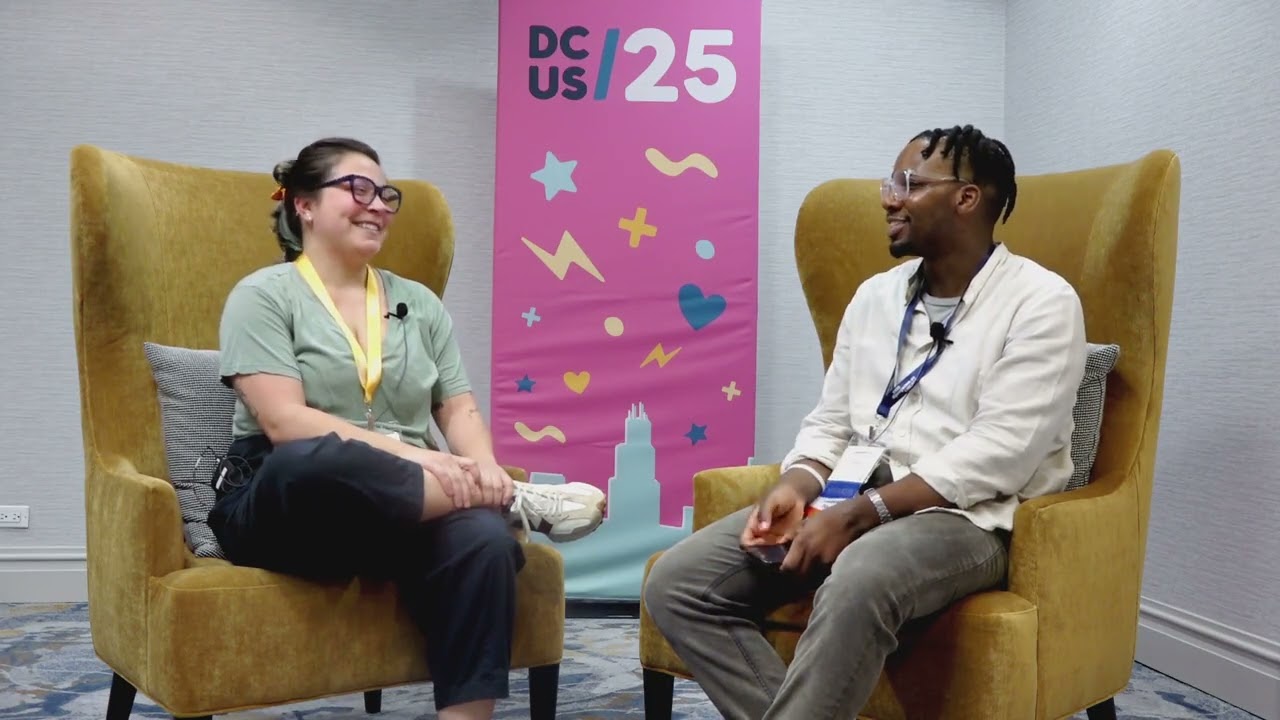
Creating an Inclusive Django Community with Kenya Phelps
Published July 15, 2026
DjangoCon US 2026
This video features Barbara Shaurette at DjangoCon US 2015 in Austin, Texas, USA.

Things That are Tired: Uggs, Segways and you! Coming Back from Burnout by Barbara Shaurette
Why is burnout such a bad thing?
When I see that question on paper, the answer seems obvious. But in nearly a decade in this community, I've seen people run themselves into the ground without realizing that they can - and should - take the time to rest. Why? Well, the short answer is that, if you don't take a break once in a while, the quality of your work suffers. But the long and more involved answer? Well, as a wise man once said,
"Life moves pretty fast. If you don't stop and look around once in a while, you could miss it."
Burnout leads to exhaustion, and that leads to terrible performance. And no one wants to be known for performing terribly - we all have too much pride for that. History is full of examples of times when exhaustion led to disaster - remember the Exxon Valdez? Imagine your open source project taking a header like that. I'm actually going to get a little science-y here and cite a few studies, in particular a recent one from Washington State University that shows how sleep-deprived people have an impaired ability to take in new information.
Of course, you can get plenty of sleep and still be burned out. If your waking hours are consumed with community work, your relationships can suffer, and your sanity will erode pretty quickly.
After nearly a decade in the Python and Django communities, I've experienced periods of overwork that have made me hate everything I was doing. I have a lot of good anecdotes, stories that will probably sound familiar to everyone in the room. Luckily, I've also learned some tactics for stepping back and recovering. It can be done, and it's easier than people think. What you're going to hear from this talk is just plain common sense. But sometimes when you're mired in work with no obvious way out, you need to hear it from someone else. So I'm giving everyone permission to let go. (And no, I promise, there will be no 'Frozen' references in my slides.)
But how do you let go? And when?
Burnout is pretty easy to recognize if you know what to look for. Are you staying up every night reading pull requests ... and is that your primary method of interaction with other human beings? Your user group may only meet once a month, but is that group still responsible for the bulk of your email? Do you secretly blame them for your inability to get to inbox zero? Is the only travel you're doing for conferences? Have you given up on vacations and just decided to see the world one PyCon or DjangoCon at a time?
The biggest indicator of burnout in the community is how you feel about the community around you. When you find yourself starting to cringe every time you get a new Twitter follower, it may be time to start saying no to things.
The most important piece of advice I have is to stop looking at what other people are doing. We all know that person who seems to have a hand in every project, but you can't judge your own performance by what you imagine theirs to be. You don't know how they may be scrambling behind the scenes.
And remember that just because you're invited into a conversation doesn't mean that you have to contribute to it - sometimes listening is enough. Emails can sometimes go unanswered - so can phone calls! Think about what's most important in your life, and start directing your energy towards those things instead.
Don't write so much code in your free time. Take a few nights off, go outside - there's a lot to see out there!
Your collaborators WILL understand. Especially if you announce your intentions to the world. Send an email, tweet it out, let people know you need some time off. You'll be surprised how much understanding you'll get and how well people will respect your boundaries (you just need to set them).
Help us caption & translate this video!
Barbara Shaurette argues that burnout comes from sustaining too many commitments for too long, especially when open-source enthusiasm, conference work, volunteering, teaching, and a day job consume sleep and personal life. Drawing on her own experience, she explains that recovery began when she simplified her life, kept only the work that mattered most—teaching young people—and learned to say no. She advises people to guard their time, avoid comparing themselves with prolific community members, delegate and mentor successors, and respect others’ boundaries rather than pressuring them to contribute. The central point is that self-care and a sustainable life matter more than one more line of code, talk, or project responsibility.
Summarised automatically from the transcript.
Automatically transcribed, so expect mistakes in names and technical terms.
So I'm I'm actually really, really glad that this room is not super packed. I was kind of hoping that there wouldn't be a ton of people here. Not not because I didn't want to speak in front of a lot of people, but but I was thinking about this. I got such a positive response to the idea of this talk. And it sort of broke my heart to think that that many people might really be that burned out and might really need this. So uh, you know, I'm not a super experienced speaker. I really hope that I can do this topic justice, because it's Seems like something that a lot of people need to hear about. The bad news is that I'm I'm not a self-help guru or a motivational speaker, a licensed clinician, any of those things. I don't really have any official capacity to tell you how to relieve your stress. What I do have is some common sense, some stories, a little bit of advice from my own stories that I think might help.
But I have this feeling, you know, if if you're here and you're already identifying as being burned out, you probably already know what you need to do to change that. But sometimes it just helps to hear it from someone else So I hope that I can help. Um you heard DjangoCon, you're already a part of a really thriving community. It's a very active community. You're already part of open source, so you're used to giving your time and energy very freely. Well, why we do that is probably a topic for another talk at another. I know that uh most people that I know outside of open source don't get it at all. You know, we give all of our free time, we work a lot in our free time, we're we, you know. Uh there was a tweet that I saw from PyTexus this weekend about leaving, you know, to go off on your Labor Day holiday weekend to go and write more code.
That's what a lot of us do. And maybe it's so that you can improve your programming skills or make some new friends, take part in this community and meet really amazing people. There could be a lot of reasons. Maybe you're just drawn by the energy and excitement of all the knowledge share that we do Those reasons have really been discussed and discussed and dissected and you know, I I don't really know. One thing that I do know is that we all have this very common passion. Everyone's very excited and they love what they work on But that that passion has to have limits. I think we've all discovered that at some point. So I'll start by telling my story. A few years ago, probably three, four years ago. now. I just moved to Austin. Um I started and finished one contract job and then started another permanent job.
I started a relationship. I was blogging or trying to. I had just begun doing young coders, which is the kids Python class and we teach at PyCon. I'd started developing that. I was teaching beginner Python classes here on, you know, and all over at small conferences around the South. I'd gotten involved with the local CSTA that's computer science teachers of America. I was volunteering with them to try and help, you know, work to improve local computer science teachers in classrooms or computer science classes in classrooms here in Austin. I was volunteering with a local program, Central Texas Discover Engineering, that brings technologists into classrooms to speak and to teach. teach and kind of get kids excited about STEM. So I spend a lot of time doing that.
In between all of those things, I was doing some technical review. I had a couple friends that were doing Python and Django books. I spent a lot of time reading. And I founded the Py Ladies chapter here. So I was spending a lot of time doing meetups and classes to try and get that group growing. So as you can imagine, I was stretched to my limits pretty much. I was really exhausted most of the time. My relationships were suffering a little bit, my friends and relatives, I was not seeing very much of them. I started developing some health problems, which I don't really go into here. I was traveling, sure, but but the only travel that I was doing was for conferences. I used to joke that I was seeing the world one PyCon and Django at a time and and not much more than that. I, you know, it started to take time away from my actual job, the the day job that pays the bills.
I was not getting to do any of the things that I love outside of programming. And you know, so after a while, after a couple of years of this, I started to really dread every meetup, every class. Oh my god, it was like pulling teeth, dragging me out to a meetup, you know know, two, three nights a week was awful. You know, in short, I was really starting to hate my big open source life. I was very involved and I didn't want to. I really wanted to run away a lot of days. So it took a couple of years of this before I realized what I had to do, and that was just to scale back. I handed Pie Ladies over to some other very capable women here in Austin and it has continued to grow to this. It's been really amazing. Um I cut my teaching schedule back very dramatically. Uh I stepped back from all of that volunteering, which was it was heartbreaking.
It was a real shame, but I'm hopefully you know, have been able to get some other people involved in my stead. And I I started saying no to a lot of requests for my time. And eventually, you know, things got sane, things calmed down, and I was able to breathe again. So we know that burnout really is a result of long-term exhaustion. You know, everyone can have a busy day now and then or a busy week. week. But it's when those weeks start turning into months and years and you're doing the same thing and you're struggling to get it all done and you're taking on more over and over, uh, you know, you're you're being spread too thin for too long and the result starts to feel a lot like depression. You start to dread what you're doing. It gets hard to get up out of bed some days knowing what you're going to be facing.
So it should surprise no one that that kind of thing can lead to really terrible performance. But what I think a lot of people don't realize is what a serious health toll it can take. Uh every time I I open a browser I see more news about new stories, new new studies that are be doing being done about the effects of overwork on the brain and the body. It's pretty scary stuff Oh, by the way, the the links in this these slides, I'm gonna post these slides to my blog, mechanicalgirl. com after this, and they're gonna be links so you can actually read some of these articles in depth, take a look at these studies and see the kinds of things I'm talking about. So when you're juggling your day job and your open source work and and your personal lives, usually the first thing that gets sacrificed is sleep. I know that's true.
of me. I was at one point sleeping maybe two or three hours a night of scary stuff. So I wanted to talk about some of these articles that I found. So this one up here, this UC Berkeley Thing that was posted in SFS back in July. This is actually a reference to the study over here from the Journal of Neuroscience. It's a very formal study conducted by UC Berkeley. I just really loved this sensationalist headline. You know, when you're overtired, you perceive friends as enemies. That kind of got me thinking, I wonder if that's where flame wars come from. People who love each other and respect each other suddenly find themselves at each other's throats when they're under the pressure of, you know, trying to get a pull request in. And then uh also you you guys know the XKCD cartoon, I can't go to sleep yet, someone's wrong on the internet.
Well, what if they're not really that wrong? What if they just seem wrong wrong because you haven't gone to sleep yet. So there's that. And then this one over here, uh this is uh an article from Mike. com from last year. There's actually came accompanied with a really great infographic. It was too large to to put in a slide here. I think you would not have been able to read it even up on this big screen. But I can give you some of the highlights. Sleep deprivation can lead to things like hallucinations. cerebral shrinkage, lost memories, false memories, uh, lost focus. I think we're all pretty familiar with that. And you know, ultimately brain damage is something that you can suffer from. But uh one of the stories that really caught my eye is this last one here uh from NPR back in May.
Uh it's actually a story about another sleep study that was done by the University of Washington. One of the examples that they cite is the Exxon Valleys crash. Now, that happened back in 1999, or sorry, 1989. So I realize some of you actually may be too young to even remember what he Huge disaster that was. By some estimates, there were something like 40 million gallons of oil spilled. Hundreds of thousands of animals were killed. including orcas. There were a couple pods of orcas that were decimated. There were seabirds, seals, sea otters. I deliberately did not get any photos from the disaster. They're just too heart-wrenching, especially, you know, if you're a a
hippie environmentalist like me. I just couldn't do it. These are very happy alive seals, not covered in oil but in water. Just wanted to point that out. But uh yeah, I mean the fact is this disaster had a lasting impact on Prince William Sound. Twenty-six years later, there are still thousands of gallons of oil in the water, in the sand. Uh most of the animal populations have not recovered. Um there was an entire oyster bed I think that was wiped out that has started to come back, but that's that's about it. Um and I remember, you know, I was in college at the time, I remember the rumor that was going around was That the captain of the ship was drunk and that he ran the ship aground. What came out later was that the captain wasn't even there. He was not at the helm. It was the third maid, who had been up and working steadily for 18 hours at that point.
Uh and and he was not the only one. The crew was accustomed to that kind of sleep deprivation, working 18-hour shifts and getting a couple of hours sleep and then going on again with no breaks, no weekends. So they were pretty overworked. And the result of that was this huge environmental disaster. So it kind of made me wonder, you know, I I know people who have stayed up as long as 18 hours hacking on a project It's not that uncommon, especially, you know, when you're young and eager and new to the community. And I it made me wonder, you know, imagine uh working for that long and that hard and being that tired and your open source project crashing like that, what a disaster that could be. Not on the same scale, obviously, I don't expect that you would kill animals, but um, you know, really
giving your most tired self to a project is not good for that project. The people that you're working with, the people that that are working around you deserve better. You deserve better. Your self-care is so much more important than getting that next line of code written. You know, sometimes you just need to step back and refresh and then come back to it with a new passion. And you know, if you're not gonna do that for yourself, please do it for the otters. So, this is if you take nothing else away from this talk, remember this phrase. This is probably the most important thing that I can tell you. When it comes time to recover. The first step is to simplify your life. You need to spend some time
thinking about what it is that you really want. Do some soul searching. Make a list if you have to. Figure out what are the things that are really important to you. What's fulfilling to you? What's giving you joy? What are you doing that is really bringing you fully? fulfillment. And you know, if the answer is none of these things, well maybe it's time to start jettisoning those things and look to something new. Or keep the one thing that you find that is really important to you. When I was feeling burned out and I needed to shed all of those projects, the one thing that I held on to was young coders because, you know, I started out my career as a teacher. and teaching kids and teaching them programming is the one thing that I love the best. So that is the only thing that I do these days, aside from occasionally speaking, obviously.
I, you know, I I focus on teaching and I develop curriculum and that's it. I say no to everything else. And uh oh, and there's one thing that I wanted to point out to you, another important point. When you are evaluating what's important to you, whatever you do. please do not compare yourself to other people that you know in this community. You know, we all know someone who seems like they have a hand in every project. They're doing all the things. And you You can't possibly know what they're going through behind the scenes. You have no idea if they are fulfilled or if they're struggling. So don't don't judge yourself by other people's contributions and other people's performances. Performance. You know, just focus on yourself and focus on what you want out of life, and I think ultimately you'll be happy. And then, you know, once you've made all those decisions and figured out what you want, get ready to start practicing this phrase.
If you are overloaded and someone asks you to speak at a meetup, you can always say no. Or actually better uh thanks, but no. Be polite about it. Firm but polite. If someone asked you to teach a class, same thing. You can say no Then if people want to contribute to their project, I and I know this is hard because everyone wants to be involved in these code projects, but if you're overloaded, you can say no and it's okay. I'm giving you permission. Um and maybe, you know, maybe you're worried that someone might be upset if you say no. And it's possible that can happen. Uh but if they are, you know, anyone who's gonna be angry at you for turning down a knock or saying no to something is someone that is not worth your time. Trust me on this. I think your mom would agree with me.
And uh, oh, and you know, sometimes no just means not saying yes. You know, you don't have to respond to every letter or every tweet. That comes your way, every email. Sometimes just listening in on the conversation is enough. You don't have to participate. In fact, you know, this is something that I feel really strongly about. I think that It took me a while to realize that any unsolicited email that I get really is just a big ask for my time that I didn't agree to. And it it takes a lot of time. You know, we want to be generous. We're conditioned to be generous with our time, but really at the end of the day, you don't owe anything to anyone. You don't have to answer that email if it wasn't something that you agreed agreed to do. But you know, note that I said unsolicited. I mean if you're organizing
an event or you're leading a project, you've kind of implicitly signed up to deal with those things. And so those in those emails that come your way, they are for you. But but that's something to keep in mind, you know, before you make your next commitment. Remember that those are the kinds of things that you're going to be burdened with. And so maybe you don't want to commit to that project or that event. Hmm. Just, you know. Oh, and also, as I check my notes here, um You know, saying no isn't a license to flake either. Do the things that you say you'll do. Just as you go forward, promise less, commit less. And you'll be a happier person, I swear. And those uh those people that all seem to be doing all of the things, there is one thing that you can learn from them.
They're very good at delegating. And asking for help. You know, the irony is not lost on me that everyone here is at the start of a conference. From the start of DjangoCon, you're going to be exposed to a lot of new ideas and projects, and you're going to want to get involved in all of them because they are all really cool. And you know, you don't necessarily have to say no to all of them. Just uh I think my my best advice to you is just to be judicious. Guard your time carefully, be judicious. with your commitments, really evaluate whether or not this project is going to be something that you'll enjoy or that you can offer something to or that will be good for you before you jump in. You don't necessarily have to say no to things, you know, but you might have to relieve yourself of some responsibilities before you take on new ones.
And uh, you know, I have a couple examples. So the first step towards giving yourself a break might be just mentoring someone new So I have a story. Over this past year, I've been traveling a lot, doing a lot of conferences, and I've talked to lots of other women who are tech speakers. And I found, much to my horror, that there are some of them that are traveling around the country at breakneck speed, doing as many as 15 to 20 conferences a year. That is no way to live Um but you know right now there's a big push in the community uh in all of open source really to increase the visibility of women and that's a very admirable thing. The problem is that these these same 10 to 15 women cannot be doing all of these talks. So, you know, I think maybe we need to mentor some new ones.
Do some teaching, bring some people up and get more people involved and get more people talking about their experiences, uh, that that are women specifically And then, you know, the same thing goes for that code library that some of you out there have been maintaining for many, many. years, probably to the point that you are so tired of it and you cringe every time a pull request comes in and maybe you're starting to really hate the language and you just just are so sick of emailing people and talking about it. But maybe you've convinced yourself that no one else can do that job as well as you can Well, I I have some news for you. There are a lot of fresh faces and a lot of developers in our community who just really want a chance to stretch and
grow and they they just need that chance to get in there and get started. You know, what's old hat for you is going to be very exciting for them. And they might make a few mistakes, they might stumble a little bit, but You know, they'll be all the better if you spend the time to mentor them. So reach out to your user groups, reach out to mailing lists, find people who might be interested in filling your shoes. If it's something that you really want to get rid of, bring some new blood in. Don't be afraid to do that. You know, and then hand the job over. I I think that once you let go of it, the waist's gonna come off your shoulders. You're gonna be able to take a deep breath for the first time in a long time, and it's gonna feel really Really good. Um, and I have another great anecdote here.
This is terrific. So something to remember if you're the one asking for help. Over the summer, I was at a party in Brooklyn hanging out with some other developers. That's pretty much the only people that I hang out with these days. Uh it was a a different community, different language altogether, but I was spending some time with some other people who are also very, very sought after speakers. And they have some horror stories to tell me. You know, they get so many requests to come and speak at these conferences that they've had to start making excuses. They have to start lying about having personal commitments or, you know, a death in the family or something else that they have to do to avoid you know, because to avoid saying no, because just saying no has stopped being enough. Um a a polite thank you, but no, I just don't have the time.
It's not cutting it. There are some organizers out there that are getting asked actively hostile and being like, oh well, so you'll do so-and-so's conference, but not mine. Well, no, no, no, no, no, you know. And it just it drove me crazy. I've never experienced that. I couldn't imagine Imagine someone being that mean. But the the point that I want to make is that, you know, if you're that person doing the asking, Just be very careful that you don't cross over the line from being welcoming and encouraging into pressuring and and bullying in some cases. Don't do that. Please, please don't be mean And you know, by the same token, if you find that you're in the position where you're being pressured to contribute a talk or contribute to a project, you can push back gently but firmly. Some people may not know
that they are putting on that much pressure until you tell them. So Finally, we get to the good part. There are actually some things that you can say yes to. Once you clear your plate, there are a lot of things in life that are out there to enjoy. You can go outside, for example. You know, your inbox can wait. Oh, no, no, no, sorry. That outside. That's the one that you want. It really is that beautiful sometimes. You know, the the point is though that when you let go of all those things that are weighing you down, you can go out and take on the things that you really love. This is just Just a quick sentence cloud that I put together with a handful of things that I enjoy doing that have nothing to do with code. I'm sure you can think of hundreds more.
You know, make a list and work towards that. And then finally, um I know, I know, this is probably one of the most annoying acronyms in the history of humankind. Uh it's been used to justify a lot of obnoxious behavior, and I felt really bad about including this. But if you think about it, there's a kernel of truth there. You know, you you only get one life. And you really owe it to yourself to make the best of it. That is it.
Burnout comes from being spread too thin over a long period—when busy weeks turn into months or years of taking on more than you can handle. It can feel like depression: you dread your work, struggle to get out of bed, and perform poorly.
Discussed at 5:00Losing sleep can seriously impair focus and performance, and studies associate sleep deprivation with hallucinations, memory problems, brain shrinkage, and potentially brain damage. It can also make people perceive friends as enemies and contribute to dangerous mistakes.
Discussed at 5:46Start by simplifying your life: identify what is genuinely important, fulfilling, and joyful, then eliminate or reduce the rest. Keep the one activity that matters most to you, and avoid comparing your commitments with other people’s.
Discussed at 11:17Say no politely but firmly—“Thanks, but no” is enough—and remember that you do not owe your time to every unsolicited request. Commit to fewer things, follow through on what you do promise, and do not treat saying no as flaking.
Discussed at 12:54Mentor someone new, delegate, and give them a chance to grow into the role. Reach out through user groups or mailing lists, help a successor get started, and then hand the responsibility over.
Discussed at 16:47Accept the refusal without pressuring or bullying the speaker. Organizers should remain welcoming and encouraging, while speakers can push back gently but firmly if they feel pressured.
Discussed at 19:07Note: We understand that names change, people change, and bodies change. We respect each individual's journey and privacy. If you have any concerns about a video or need us to remove content, please don't hesitate to contact us. We will handle your request with care and promptly address any issues.
Published July 15, 2026

Published July 15, 2026

Published July 15, 2026
Published July 15, 2026
Published July 15, 2026
Published July 14, 2026