
0:05:40
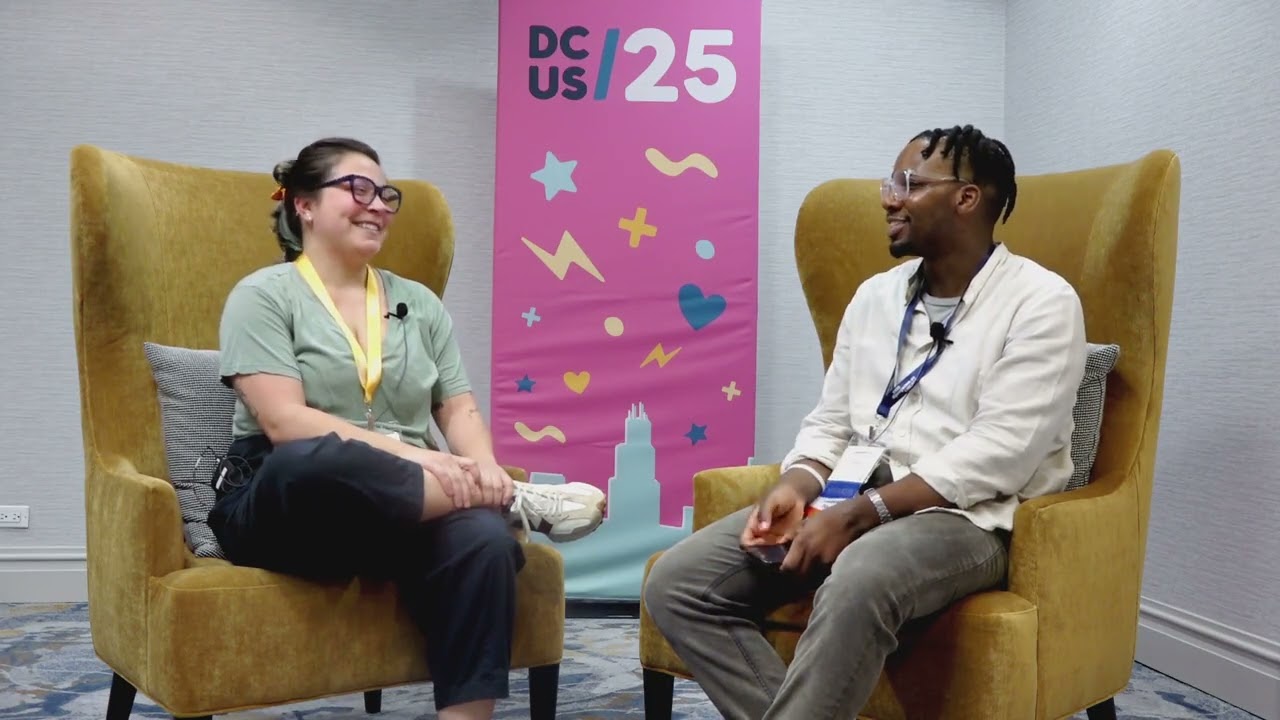
Creating an Inclusive Django Community with Kenya Phelps
Published July 15, 2026
DjangoCon US 2026
This video features Amanda Clark at DjangoCon US 2016 in Philadelphia, Pennsylvania, USA.

The Fraud Police are Coming: Work, Leadership, and Imposter Syndrome by Amanda Clark
What is imposter syndrome?
It's a failure to internalize your accomplishments. It's the nagging feeling you don't know enough, haven't done enough, don't have enough experience to do your job, land a new account, publish a new paper. It's feeling like a fraud and that you're about to be found out. The term was coined in a study by Pauline Rose Clance & Suzanne Imes in 1978 having to do with the habits and behaviors of high-achieving women, but it's recently become a hot topic in tech and career conversations - with good reason.
Who does it affect?
Originally a phenomenon studied among women in academic fields, studies (and anecdotal evidence) have shown it affects just about everyone. Sheryl Sandberg, Meryl Streep, and Maya Angelou have all commented about their own experiences with imposter syndrome. After we've asked, so have most of our friends and colleagues. We combine research with personal experience to provide the Big Six signs you might have imposter syndrome, so you can recognize the symptoms in yourself.
How is it affecting me?
Imposter syndrome can make us feel like we need to be super-people, adding and adding to our goals each day, with no end in sight. It means we might be less likely to raise our hands for new projects because we don't think we know enough. It might keep us from speaking up in meetings, seeking promotions, or talking at conferences. It can bring feelings of self-doubt, anxiety, fear, alienation, isolation, shame or despair. It can be paralyzing to a person's career.
Does it get better?
Thanks to the Dunning-Kruger effect, the more you learn, the more you realize how much you don't know. When combined with the imposter syndrome associated with increasing achievements over time, it usually gets worse.
But...there's good news.
Through identifying specific components of imposter syndrome, you can sort out what's a real area for improvement and what's mostly anxiety. Dealing with imposter syndrome is often part of the price of doing new, exciting things. We can help you figure out to cope. This talk will also help you recognize imposter syndrome in friends, colleagues, and employees, and we'll help you think about how to best support them. (Hint: responding with compliments does more harm than good.) By the end of our talk, you'll to learn how you can leverage the feelings of imposter syndrome to become a better leader, colleague and human.
This talk was presented at: https://2016.djangocon.us/schedule/presentation/28/
LINKS:
Follow DjangCon US 👇
https://twitter.com/djangocon
Follow DEFNA 👇
https://twitter.com/defnado
https://www.defna.org/
Imposter syndrome is the persistent feeling that you are overestimated, underqualified, and about to be exposed, despite evidence of competence. It affects people across genders, professions, identities, and career stages, and often produces a cycle of anxiety, procrastination or over-preparation, achievement, discounted praise, and renewed self-doubt. The speakers reject “fake it till you make it” in favor of curiosity, motivation, growth, humility, and empathy: name the cycle, set realistic goals, treat failure as an event rather than a verdict on your identity, accept praise, and use success to support others. They also argue that colleagues and communities can reduce imposter feelings by answering questions generously, checking assumptions about prior knowledge, and creating supportive environments where people feel safe to participate and lead.
Summarised automatically from the transcript.
Automatically transcribed, so expect mistakes in names and technical terms.
Speaker 1: Come on, no, yeah, yeah, yeah.
Speaker 2: Thank you everyone for joining us for the Fraud Police Are Coming, Work, Leadership, and Imposter Syndrome. For those of you who like Twitter, like us Here is all of our Twitter information. You can find Amanda at Captain Pollyanna, me at Babe from Toyland, and we have a session hashtag which is imposters unite. So tweet away. So how did we get here to be talking to all of you about imposter syndrome today? It started with me getting mad on the internet. I really enjoy reading career advice articles and I've been seeing a lot of them about imposter syndrome a couple years ago. I read them and I read them and it wasn't that imposter syndrome didn't seem real to me.
Speaker 2: It was that the advice didn't seem good And so I started talking to people, I started tweeting about it, I talked to Amanda about it, and this was a couple of days before Bar Camp Philly in November. And Amanda kind of strong-armed me into co-presenting a talk on imposter syndrome, which I might add I did not want to give because I did not feel qualified to speak on the subject.
Speaker 3: So we started talking last November, as Brianna mentioned, at a bar, and I feel like we haven't stopped since Um I really learned a po about imposter syndrome that night and identified really strongly with it and I just dove in. I learned as much as I could, we read as much as we could. between our conversation in Bar Camp Philly and when it came time to present, we told people what we knew and then we sat back and waited for questions. And we got a lot of people telling us stories then and throughout the rest of the past seven or eight months, people that were feeling this way too. And I just felt, and Brianna I know feels that it's so important to talk about this. So we're so excited to be having this conversation again today with you.
Speaker 2: Alright, so to start, what is imposter syndrome? The term was coined in 1978 by Pauline Rose-Klantz and Suzanne Imes. who did the groundbreaking research on what imposter syndrome was. They initially did a study among high-achieving women, and they defined it as a failure to internalize accomplishments. Which doesn't particularly sound meaningful. The way that we like to describe it is the nagging feeling that you are overesteemed, underqualified, and on the verge of being found out as a fraud.
Speaker 3: So we wanted to keep having this conversation because not everyone knows the term, even though they might be feeling it. So if you've already self-identified and you're in good company, just look around you. Um guess who else feels like an imposter? This guy. Einstein was quoted as saying, the exaggerated esteem in which my life work is held makes me feel very ill at ease. I feel compelled to think of myself as an involuntary swindler. My
Speaker 2: Angelou said, I have written eleven books, but each time I think Uh-oh, they're going to find out now. I've run a game on everybody and they're going to find me out.
Speaker 3: And then we have Jody Foster, uh confident actress who's been in tons of movies, when she won her first Academy Award, she was quoted as saying she thought it was a fluke. It was the same way when I walked out on the campus at Yale. I thought everyone would find out, they'd take the Oscar back They'd come to my house knocking on my door and say, we meant that for someone else. We meant that for Meryl Streep.
Speaker 2: Meryl Streep said, I don't know how to act anyway, so why am I doing this? The point is that we've heard about imposter syndrome from people in basically every profession that we've talked to. Professors, researchers, programmers, bankers, real estate agents, designers People in every stage of illustrious careers, all of them share similar stories. In fact, some research shows that about 70% of people suffer from imposter syndrome I personally think that might be an underestimate because this is 70% of people studied who admitted that they have symptoms of imposter syndrome.
Speaker 3: When originally the studies were done, imposter syndrome was thought to be a phenomenon that was present mostly in women, high-achieving academic women, as Brianna mentioned. As time has gone on, it's clear that it affects people in every age, race, gender, industry. Often it affects male impostors doubly. Because they're already feeling like an imposter in their role. And then they feel like they shouldn't be having these feelings anyway. So it's like imposter times two.
Speaker 2: Right, there's that high achieving women research that we talked about at the beginning, and part of what was interesting about that and part of what led to more research being done among women exclusively was that part of the identification for imposter syndrome was rooted in gender roles. But as time has gone on, not only have we seen how this affects people from all genders but also how it affects people who are different minorities in whatever context they're a minority in. For
Speaker 3: any of you with us so far You know the feelings, and you know you're not alone. Next up are some big indicators that you might relate to, even if you haven't yet. So we're going to talk about the big six. And these are big six big factors that were identified by researchers, Sokoku and Alexander, when they wrote the paper called the imposter phenomenon. The first of the big six is the imposter cycle. And we've drawn out the imposter cycle. Just take it in. I feel like the emojis speak louder than words, but We'll go through the words anyway. So it begins up here with a new project or task. Could be big or small Can be a little exciting, but with that excitement
Speaker 3: can immediately come anxiety, self-doubt, and worry creeping in So you have to begin, and oftentimes you begin with furious over-preparation for hours upon hours and days upon days, sometimes also procrastination. Also for hours or days upon days. The thing is, these two things can also come hand in hand. They can both be happening simultaneously on the same day. Inevitably, because you're smart and you're talented, you accomplish the goal. You achieve something. And it's immediately a feeling of relief. You're like, okay, it's done, it's off my plate, this is great. I can move on. But then you start getting feedback.
Speaker 3: And even if the feedback is overwhelmingly positive, great feedback, you're still in your head potentially discounting this feedback as either luck. Like I just got lucky, this wasn't really meant to happen, or it's over you're you're looking at the over preparation and thinking how you expended so much effort, more effort than maybe your peers would have had to expend, and that if you'd spent more time in it, it would have been even better. But essentially, it's bringing you back around to that increased sense of fraudulence, the feelings of anxiety and self-doubt.
Speaker 2: So as a case study for the imposter cycle, I like to use our own talks on imposter syndrome. I apologize at how meta this is. I hope everybody has had enough caffeine to deal with us But starting off in the new project or task, I'm going to start off with the talk, the version of this talk that we did in January at Panma in another room in this very building. Because the bar camp talk was such a last minute ordeal. But for that one, we had a good two months that we knew what we were up against. And so the anxiety and the self-doubt and the worry all started to come into play. As soon as we felt that there might be some expectations as to the quality of our imposter syndrome talk. There had been some people at the off-the-cuff one we did at bar
Speaker 2: camp, but for those of you who have not been to a bar camp, the expectations tend to be relatively low. It's a an unconference where you decide what the programming is the day of. And so it's very casual. in terms of giving talks, this was going to be an actual talk that people came just to see. So naturally we jumped straight into the procrastination slash over preparation phase. For me, that looked like going through my college alumni JSTOR account and looking at every single possible thing I could find on imposter syndrome. imposters, imposter phenomenon, and every variation thereof. And then also watching a lot of Parks and Rec and West Wing. I was also doing that this weekend.
Speaker 2: If you look at my Instagram and my Twitter feeds, you'll see this cycle wonderfully illustrated. Like many people, I switch back and forth between the procrastinate and the over-preparation one very, very frequently. You may have experienced this yourself Then after the talk, that was the accomplishment. People said we did a pretty good job at it, and I just discounted the feedback on that right there. People enjoyed it Not said we did a pretty good job on it. And then we felt a little bit of anxiety about how it went if it was just because people People never heard of imposter syndrome before and it was their introduction to the concept. And after that, you are rewarded with another project or task, usually one that's slightly heavier or slightly more difficult than the task before it. In this case.
Speaker 3: Here we are.
Speaker 2: All right, so number two of the big six. And they're all much shorter after the first one, I assure you. The need to be special or the very best. This manifestation of imposter syndrome is the one that keeps you as a big fish in a small pond. Or where you focus on other people's perceptions of you rather than your own perception of how hard you worked.
Speaker 3: The next is the quest to be superhuman. And I know many of you may know this, but our expectations of ourselves are often a lot greater than the people around us have of us. Our colleagues, our friends, our loved ones, even our bosses. With our jobs, we often set these really aggressive, um, sometimes unrealistic, sometimes superhuman, yes, uh, goals for us And at home, we often doubled these expectations trying to tick a hundred things off of our to-do list. And we'll get more to that later. The quest to always be doing more and the eventual burnout leaves us feeling like a fake. If I were really good at my job, I could handle all of this. And even though this might be too much.
Speaker 2: Fear of failure. Who has heard the phrase fail fast before? Anybody ever notice how they really undersell how much it sucks to fail? We talk a lot about failing fast and failing big, but falling on your face sucks. Especially when you're constantly rewarded for doing well on a task by having to perform on a larger and larger stage or in front of more people. And this also leads into fearing success, which is something that we'll talk about in a little bit more.
Speaker 3: Next is the denial of competence or the discounting of praise. When we describe our accomplishments with words like just or merely or only or minimizing them. And when we're complimented on our work and praised for our skills and we say, well, it could have been better, or you see, I just got lucky, or thanks, but We're feeling fraudulent and thinking that discounting this praise is making us more humble. Um, and if we just accepted it, it might feel like cheating. Unfortunately, you're also telling the person praising you that they're wrong, and that's not great either.
Speaker 2: And the last of the big six is fear and guilt about success. This manifests in a few different ways. One of them is not wanting to become successful in case you fail, which is tied to number four. There's also guilt about success that's related to did I deserve this? Should I have been the one to get this You can also create distance when you're spending time with people who are close to you who didn't succeed in the same way that you did. You see this sometimes with first generation college students where there's some distance that's created between them and the rest of their family. So did anybody identify with any of those big cisks hands? Did anybody not raise their hand because you wanted to see what everybody else was going to do?
Speaker 2: All right, so what we're going to do is we're going to take about 30 seconds to sit here. And if one of them rang true to you, or all of them rang true to you. And take a minute to write down or make note of one thing that you would like to do that feeling like an imposter has been holding you back from. So
Speaker 3: assuming you've all written down the one thing that you feel like imposter syndrome is holding you back from, we'll get into the next topic, which is it gets better, right? And we have some news that may not be easy to hear, but it might make might make sense to some of you who are further along in your career and may have experienced these feelings for a while. And that is the more that you know, the less you think you know And Brianna will explain more.
Speaker 2: All right, so some of you may have heard of the Dunning-Kruger effect, and this is kind of what this is about. Dunning and Kruger did research on perceived competence levels. Basically, here's an illustration done by Jessica Hagee from This Is Indexed that shows the more education you have about a given subject, the more you know. And also the more education that you get on a given subject, the more you know you don't know. So when you're starting to learn something new You might think that you're a rock star immediately. An example of this that comes to mind for me is the first time I sat down and tried to learn some HTML And I remember the feeling when I got something to say, hello
Speaker 2: world, on a page that I made and I was so proud. Like I can make so many websites hundreds of websites a day. And then I tried to do, I don't know, anything else. Right, so like once you have that initial understanding, you feel great, and then you start to realize how much you don't know, and wonderfully the gulf gets bigger the more experience you get So if you feel like an imposter right now, it's only going to get worse from here. I am sorry. And another wonderful illustration from this is index that displays the difference between Dunn and Kruger. and the imposter syndrome. With Dunning Kruger, you think that you're really great
Speaker 2: and you're not. And with the imposter syndrome, you think that you're really bad and you're great. And it's really hard to know what the difference between those two things are. We're going to work on it.
Speaker 3: So if you're thinking, how does this affect me? And I I sense your feeling you might know already. We talked about being superhuman and trying to be superhuman. And we often have high expectations and low levels of forgiveness for ourselves. We work long hours, we miss out on sleep, and sometimes fun and enjoyment because we're trying to do all the things. We feel like failing when we can't do it all. In fact, I found a copy of Brianna's to-do list. I hope she doesn't mind if I share it.
Speaker 2: It's not actually mine, I didn't write this. Um Sarah Cloak wrote this wonderful list, 95 things I should do every day according to the internet, including such important highlights such as wear smart professional outfit carefully selected from capsule wardrobe , shower, make sure water temperature isn't too hot. I think meditate is on here about three different times. Uh and if you are anything like me and really, really love looking at articles on the internet that tell you everything you're doing wrong about your life This might be a narrative that you have running in your head pretty frequently, particularly when we're looking at a culture of life hacks and twelve things that real leaders do before breakfast.
Speaker 2: And so the end result of that is the people with imposter syndrome are less likely to raise their hands. This is according to some research from Rigawe and a number of research partners that people who have imposter syndrome in the workplace Are less likely to volunteer for projects that fall outside their job description, they're less and less likely to take on new things, and they're less likely to participate in a way that is beneficial for the organization but not for them as an individual employee.
Speaker 3: And Brianna and I were lucky enough to hear a related um talk by the very brilliant Amy Cuddy. And she gave a TED talk about presence. Um she just published a book by the same name. And she talks about how our posture affects our mentality and the more space we take up, um the bigger that we are, the better that we feel and the more confident and present we are. The opposite can happen if we don't feel confident and we're trying to almost go within ourselves and shrink away. um making us even less likely to participate, to put ourselves in situations where we might not know everything, and like Brianna said, more less likely to raise our hands.
Speaker 2: And so what does that wind up feeling like? Self-doubt. You're less likely to start new things. Like I said, you're less likely to take on new projects, and you're not very good at evaluating your own performance.
Speaker 3: Anxiety. I think we've all felt something like this. The feeling of is it all gonna come crashing down? Uh what if I can't pull it off tomorrow?
Speaker 2: Fear of failure and fear of success.
Speaker 3: Then the feeling of isolation. And this seems to be big in some of the people that we've talked to that didn't really know imposter syndrome was so common. It's the feeling that no one else feels this way, that you're all alone, everyone else seems confident, knows what they're talking about, and that the people around you and your peers are smarter than you.
Speaker 2: Shame. This is a big one for Brene Brown if anyone else has a similar favorite researcher storyteller. She's the only one I know of. But feeling embarrassed not to know things, feeling like your work wouldn't stand up if somebody who actually knew what they were talking about were to look at it
Speaker 3: And then last there's despair, which seems like a really heavy word, but it's that feeling of there's no way this is gonna get better and I'll never catch up to my peers and I'm stuck feeling this way always. In short ,
Speaker 2: we have some solutions. All right, so like I mentioned at the beginning of this talk, when I first started reading about imposter syndrome, there was some common advice about it that didn't sit right with me. And the number one most common imposter syndrome advice I saw was this. Fake it till you make it. I really dislike fake it till you make it. And here's why. Fake it till you make it relies on dishonesty. And it doesn't address the core issues related to imposter syndrome. The whole concept of fake it till you make it is fine to get you in the door But then you get there and maybe you learn the thing that you're supposed to learn or you pick up the skill you're supposed to pick up. And then you're rewarded in some way
Speaker 2: with a promotion or you take on more responsibility and then you have to fake that thing and what you wind up in is a perpetual fakeness suc fakeness cycle and when does it end? So instead, think about what you value and what the kind of place that you want to be in values. Amanda and I came up with five values of our own. The first one is curiosity. Curiosity is fundamentally incompatible with fake it till you make it. Fake it till you make it assumes that you have to act like you know everything, and curiosity encourages you to ask questions. And
Speaker 3: motivation. Motivation is what gets us up in the morning. It's what drives us to make things better, whether that means by helping people or solving problems And your motivation is fueled by passion. And I think we can all identify that as a value that we have.
Speaker 2: Growth. If you're already acting like you're at where you want to be, then how are you going to actually get there?
Speaker 3: Humility. And this may seem like a contradiction since I I know I've been talking about accepting praise and owning your accomplishments. You can do these things and still be humble. Humility is valued because it means you're not being egotistical or vain or conceited or as I've liked to put it, a bragging jerk face
Speaker 2: And number five, empathy. You can't hear somebody if you're too busy focused on what other people are thinking of you. All right, so when you look at this list of five values, what you see is that it's not about what you know. It's not about specific languages, it's not about Any kind of itemized checklist that you could possibly address. This is about how you think and the kind of person that you are.
Speaker 3: And we talked before about the six ways that you could be experiencing imposter syndrome. And what we wanted to go into next are the ways that you can leverage these feelings for good. And we present to you not just the big six, but the manageable, not that bad six. So the first was the imposter cycle, which you remember was that long journey of experiences that lead to one another that we kind of get stuck in. And the way around that is to name it. To stopping the cycle is all about recognizing that you're in it. If you can anticipate your next move or reaction, you can intervene on your own behalf. Reversing negative feelings and self-talk can be tough. But you can take this opportunity to feel empathy for yourself and those around you
Speaker 3: who may be in the same boat and maybe feeling the same things that you're feeling.
Speaker 2: This is one that can be really helpful if you do the same task multiple times as well. You get to learn what your own cycle is No, about three days ago getting ready for this talk, I knew that while I felt fine at the time, that within the next 12 to 18 hours I was going to start freaking out Uh and I did. And then I watched CJ Craig on the West Wing and Calm Down. It's my touchstone. So number two, the need to be special or the very best. We instead would like to offer you there is no very best There is no single best Python programmer in the world, I can assure you. There is no single best anything
Speaker 2: in the world. And in any kind of situation where you see somebody who is supposed to be the best at anything, it's not the only way to measure the best at that thing. And this may sound cliche, but you are awesome. And you don't have to be number one in anything because there is no number one in anything. Be proud to be counted among your talented and intelligent and wonderful peers And you can lift each other up, but you can't lift each other up if you're constantly trying to one up each other's accomplishments.
Speaker 3: We talked about the quest to be superhuman and trying to do everything under the sun, everything that we think we should be doing. Well, a remedy for this is to stop. Just to stop. You have to stop holding yourself to unrealistic expectations. Prioritize the important things Assess actual knowledge gaps that you may have and start learning things that can help you. But pick one thing at a time. Choose one thing that you could start learning today or tomorrow that could help you get better at your job. But try not to s set those goals for yourself where you're trying to do ten things at once. You're not boiling the ocean, you don't have to do everything. And setting small goals for yourself is important and also being able to forgive yourself when you don't achieve all of your goals.
Speaker 2: So you don't have to do 95 things a day, even if the internet says you should. All right, fear failure Redefine failure. This is a huge one. Obviously, all successful people have failed. We talk about this all the time. But taking your failures as a failure of the thing that you did and not a failure of failure of you as a person is extremely important for addressing imposter syndrome. And this is something that almost everyone I know has to remind themselves of constantly
Speaker 3: The next is the denial of confidence and discounting praise. And we don't want to get caught up in this. Sometimes it's okay to just say thank you. It's easy to tell yourself you're being humble or you just got lucky, but if you worked hard, accept the compliments. If you're criticized, you can take it in stride, but if you're getting a compliment Remember, you have to give the compliment giver the respect that they deserve and remember that their point of view about your skills has value. Internalize the accomplishment and recognize that your skills, your drive, and your talent are what got you here.
Speaker 2: And finally, fear and guilt about success. For one thing, get out of your own way. Um just acknowledge that success can be scary. That While that is a scary thing, you can motivate, inspire, and kickstart your friends and colleagues towards success. by displaying your own. Don't feel guilt for beating out others for awards or promotions. It doesn't mean to be ruthless It means accept that with the responsibility that it comes with. When you are recognized for doing something, when you get a promotion, recognize that as an opportunity to lead and to help other people achieve success
Speaker 2: Know that the success in that one instance can be a great reminder for the future, and then help bring other people to success with you.
Speaker 3: There's so much at stake for us as a culture of increasingly educated, talented, and skilled people, most of whom don't know how great they are. For those who come after us, we need to embrace our inner impostors and talk nicely to them about how we're growing and becoming better, and about how far we've already come. Remember that you deserve to be where you are, to go where you're going next, and to help others gain confidence by sharing your knowledge.
Speaker 2: We're living in a world where smart and empathetic people are self-selecting out of opportunities. It's important on an individual level, but we also know that representation matters. We are motivated to succeed when people who look like us and face challenges similar to our own succeed before we do. Leadership doesn't have to come from the top. So at this point, we'd like everybody to take a look at whatever you wrote down a few minutes ago. We hear a lot the phrase, what would you do if you knew you could not fail? It's an unrealistic viewpoint. And we're not asking anyone that, but we are asking you to consider what is important enough to you that it's worth going through all of this stuff that we just talked about.
Speaker 2: We'd like to end the regular part of the presentation with this wonderful quote by Kelly Sudakonic, who's a comic book writer. Heroes don't limit themselves to the fights they know they can win. So thank you all for joining us And now we'd like to take a few minutes if anybody would like to share any of the things that imposter syndrome might have been holding them back from, or an example of experiencing imposter syndrome in your own workplaces or personal lives.
Speaker 3: Thank you so much. So
Speaker 4: first of all, uh I wanna thank you a lot to say this out loud. It's uh it's it's it was really great. Uh but I have a question for you because What about the fear that you're so ignorant about something that you can't actually realize how bad you're at it? Because I I think what what you guys are talking about here, it actually assumes that you can realize that maybe you're bad at something. But what about if you don't have that knowledge?
Speaker 2: That's a really excellent question. One thing that we originally had actually as a part of our slides and we couldn't quite get it to work in uh was about the importance of both asking better questions and providing better answers and this is not a thing that's specifically for one individual to do. But one thing that I've seen is people have questions about something, they are a really elementary understanding, they ask a question, they per and then the person they ask the question of Says, oh, you don't know that already? Or oh you they haven't covered that with you or oh how did you not figure that out yet? Uh and so on the flip side of that for anybody who's concerned about feeling like they don't know enough to be sure that you're providing answers in a way that you would want to hear them.
Speaker 2: But in terms of knowing how much you No. I would recommend really getting immersed in a community of peers and helping each other.
Speaker 4: That was great. Thank you.
Speaker 3: Thanks. Anyone else, if you don't have any questions, we'd um love to hear if you wanted to share your experience or anything that resonated with you about imposter syndrome or anything with uh the topic that you're experiencing at work or at home
Speaker 5: sure uh so last year I did a talk at uh Pygotham for the first time and And after they accepted my proposal, that's when it all like came crashing for me. Because I was like, Who am I? Who am I to go and talk to a bunch of people that probably are a whole hell of a lot smarter than I am and know a lot more about this stuff? But what's really cool, especially in like the Django community, I'm sure you guys can appreciate this, is like the the community was super supportive and like everybody's like really positive and uh so to your point, you know, there's definitely some risk to it, but especially if anybody more specifically if anybody's
Speaker 5: thinking about or hesitating about doing a talk. It's like especially in this community, like go for it, you'll be fine. Promise. I promise you'll be fine.
Speaker 3: That's great.
Speaker 2: Thank you for that.
Speaker 3: And something we we heard that I'd like to share is we were talking about this before we came in here today. One of the things that Amy Cuddy spoke about in her talk about presence was when she gives a talk, one of the primary things that she does to feel comfortable is to trust her audience. So going into a presentation or to a talk with the knowledge that On the whole, people are good people and they want to listen to what you have to say and they're they are curious and they are empathetic. And I think the Django community is a really good example of a place where you can trust your audience.
Speaker 6: I always have an issue where I feel if I'm not the best at something, I'm automatically the worst at something, which always gets in my way And to prove that a little bit, I was using the wrong hashtag through the entire talk. And then I got there and I'm like, ah, this is horrible. So will you please forgive me?
Speaker 2: Yes, absolutely. Uh also there are two ways to spell imposter and I didn't clarify which one we were using at the beginning, so that might be my fault.
Speaker 7: It's kinda nerve wracking. Um
Speaker 2: Yeah.
Speaker 7: Uh I I guess I gotta comment because um you know, starting out not having ever been hired in the tech field but really liking it, you know, you go online, try to get help and we've already had talks on this and everything, but you know, you might write in to a Stack Exchange a question and then somebody writes back and it's like Like, go study or like before you like, why not study this before you ask a question? So it's really hard because like you really don't know much. But um I feel like now I've realized that if I I'm just focusing on what I want to do. I'm doing projects that I like and I'm so curious about them that it just doesn't matter as much anymore and all that's kinda going away. And I feel like I'm just following my heart and like that's why I'm here for now.
Speaker 7: It's kinda it's kinda cool, but you guys are awesome by the way. I mean like this is a cool place to be, so yeah.
Speaker 2: Thank you.
Speaker 8: Um I would like to share uh kind of two different varieties of this that I see in myself. Um one is I Don't think I unrightfully think of myself as somebody who has to bite with laziness. I like it when things work and they work well, um, and I want to get to that point Immediately. And I know this about myself. Something I struggled with my entire life since I was a teenager. Probably before, but you know, nobody pays attention when you're eight. Um but um in trying to deal with that and trying to make sure that I don't slip into that kind of
Speaker 8: um well laziness. Uh I almost get into uh uh Kind of like I feel like an an inverse spractal. You know, not the kind that goes out and gets more detailed because you can see it because it's bigger, but the kind that keeps going inwards, you know, infinitely. You know, and and um that's really hard because it's a matter of uh un unlike the examples that you gave in your talk where you know people will put in twelve hour days because Um, you know, oh I have to get this done to prove something because they will get it done. Um sometimes I find myself not getting it done. You know, I'm putting in those twelve hour days and it's not getting done because it's not perfect. Or you know, the other thing in the open source community is, you know, like the
Speaker 8: last fellow just mentioned, is that um we tend to be rather ruthless. um not not necessarily the Django community, but you know, in the open source community, uh with uh new people. You know, we get on their cases about, you know, well didn't you read all those man pages? Didn't you go to read the docs and read that, you know, 400 pages of documentation and understand everything perfectly the first time? Because you know, there are probably a few of us that can do that and and most of us can't. Um but uh it's also too is is Kind of recognizing one's pardon the term inner asshole. Um because we feel that with ourselves.
Speaker 8: We're like, I haven't done enough groundwork to ask that question yet. Or I'm go I want I want to fix this thing in this particular project, but this is absolutely not up to the standards of the project you know, the people in the project. And you know, you don't even give them the opportunity to tell you this is garbage. You know, you just kind of you know, flog yourself into that. And ultimately, you know, in six months, you'll have the perfect patch set. But in the meantime, you know, it's still broken. So anyway, I just wanted
Speaker 2: thank you for that. I'd imagine that's not unrelated to the number of web developers I know who don't have their own personal websites. Um
Speaker 1: thank you so much for this talk. I really uh appreciate that you came at it from the perspective of like
Speaker 6: knowing that we all uh occasionally or maybe frequently
Speaker 1: have this imposter syndrome and we uh um and uh
Speaker 6: how to sort of address that within ourselves but I also feel like I often find myself
Speaker 1: in a different position, which is that I often find that I am in a group, you know, whether that's in a workspace or with my friends, where I actually feel like I have a fair amount of confidence and I feel like sometimes the people around me have less confidence than you know that they deserve. And uh
Speaker 8: I would I would love to hear if you have thoughts on how you create environments like conferences or workspaces or even like how you deal with it in your social groups.
Speaker 1: Um you know how you create places that that support people who are experiencing some imposter syndrome.
Speaker 3: Yeah, I think um we touched on that a little bit when we were talking about succeeding and how when you succeed You're not only benefiting yourself and the work that you've done, but you're able to inspire others. And it comes back to what Brianna was saying before about giving good answers when people ask you questions And not being the guy or the girl who says, oh, you should have read that in the documentation, or oh, you should know that already, or why haven't you learned that? But being the person that answers questions in a really helpful way and in a way that can build people's confidence and pointing people in the direction of resources that they might not know about that can help them build their knowledge and continue to grow as developers and as people
Speaker 3: and being able to kind of be supportive to your close network so that when you're introduced to someone or you speak with someone outside of the network at a conference like this that you feel like you have practice in being supportive and in being empathetic and in answering people in a clear way It helps them.
Speaker 2: But also default to checking in with people to make sure that they have the necessary baseline knowledge for whatever conversation you're about to have. Um I know that one thing that has made me feel like an imposter several times several's an understatement. Many, many times in the past is being part of a conversation and then realizing about two minutes into it that I don't know what's happening and 20 minutes into it that I haven't known what's happening the entire time And then there's also the assumption that I know what's other people think I know what's going on and it it's awful.
Speaker 3: Thanks for the question.
Speaker 1: Thank you.
Speaker 7: I um I wanna do my sharing force and how sorry. Um so I am a uh I'm in an I work in IT for a university and I haven't completed a formal education and that is terrifying. Um it's terrifying to say to a large group of people Uh this is the second time I've heard your talk and it is uh the second time I've had the chance to share this with a large group of people and it feels it felt better the first time. I'm hoping it makes me feel a little bit better this time. So I just want to say thank you for you know, giving this talk. Um I some I think you might have been the one in y in this talk to say uh I don't know exactly where I figure where I heard this, but Uh I'm reminded that the the people who hired me are confident are
Speaker 6: knew this about me before they hired me throughout my career and are confident in my ability to do my job. And I have to remember that when I'm you know, doing my job because otherwise I I'm terrified. So thank you.
Speaker 2: Thank you, Ryan.
Speaker 7: Uh thank you guys for your speech. Uh it really resonated with me. Um kind of like uh I'm sorry I don't know your your name but uh like it um like you're saying I'm I'm self taught too and kinda when you first start out you you kinda don't think you're a programmer and you have to be the expert at like all all these things And I I I guess just just more common. Like if you're reading stuff and just doing it, even if it's just like following the examples or still a programmer, don't don't not call yourself one because you don't think you have the skill level, you're you're getting there So thank you.
Speaker 3: Yeah, that's definitely important. Thank you so much.
Speaker 2: Yeah, there was a survey going around recently, and this is terrible. I should not be saying this into a microphone because I have no citation information for this whatsoever. But there was a large survey of developers. I can't remember where it came from. Uh 48 %, I believe, of developers in the survey were did not have any kind of computer science degree. Which is not surprising anecdotally, but I've spoken to so many programmers that feel like it's just them, that they don't have a degree or they don't have one in in Compsci.
Speaker 3: Hi. Uh so I guess I just kinda wanted to come down and speak, even though like I'm freaking out right now. Um 'Cause I just cause I no didn't notice a whole lot of well, at least cisgendered female uh coming down, so I kind of wanted to represent. Um uh I just wanted to share that um I'm actually a sysadmin, I'm not a developer, so that's like Number one and like I don't even know what I'm doing here. Um but like
Speaker 8: it's also very traditionally male dominated, just like programming as I assume, but the the whole neck per neckbeard vibe is very, you know Strong. Uh and um so uh so that even so even just admitting that I that uh that I feel like an imposter a lot of times makes me feel like that some like this is gonna have like really bad repercussions for me in the workplace. I I actually work at Wharton here, so there's probably a lot of people in this room that I'm like afraid to find my supervisor's not here, thank goodness. So I can say this, but I'd no one tell him that I have no idea what I'm doing in my job every day. Um but like that's what I feel like. And there's probably people in this room who think I'm an idiot too. Shh I don't care about you either. But like that's that's sort of the the general thought process that like I guess goes through my head every day and I have to try and
Speaker 8: I've read about imposters and driven on the internet and I kinda try to remember myself and
Speaker 3: go through these steps, but it's like it's a process every day I've got to wake up and remember. Even if you think you're an idiot, you're the only idiot still doing this job, so you've got to like, you know I guess they'll help. Yeah. Thank you.
Speaker 8: No vertically challenge here. Um I thought one of the most interesting things you said was that people with imposter syndrome and you know who you are don't raise their hand. It's much easier to be smart if you set the agenda So if you have someone who's giving you a coding exam and they want you to rebalance a red black tree or something like that and you vaguely remember that from way back when, you're gonna look like a fool. It's the person who's asking the questions who has a lot of power So if you put yourself in the position where you keep your hands down, you're never the person asking the question. So I think the counterintuitive part of the solution is to be the person who stands up and talks. So the more you hide, the worse it is. Better to stand up and give it a shot. And even if you get shot down first time, learn from that and get up again and again and again until they don't shoot you down.
Speaker 6: Hi. So in about forty-five minutes, uh I'm going to be standing there and I'm going to be giving a talk and I'm feeling pretty impostery about it right now. What did you guys do to psych yourselves up for this one?
Speaker 3: Thinking back to an hour from now, um I think a lot of what we have tried to keep in mind and what we we've told people actually as we've had these conversations for the past seven or eight months is that your set of knowledge, your set of skills um is different from anyone else in this room. And there's I want to say it's like a Venn diagram or close to a Venn diagram that people think of or that that has been seen uh when thinking of imposter syndrome and it was what everyone else knows and what I know being a very small part of that. But in reality, what someone else knows and what you know may have overlap But you still have a lot to provide and a lot to offer. So trying not to go into a presentation or a talk
Speaker 3: thinking that Your audience knows everything you're already about to say, and they're not going to be learning anything, and they're going to be judging you, and they're going to be you know, sitting there doing something else. In reality, like people are here and people are gonna be at your talk because they want to hear what you have to say and you know things that they don't know yet and you're gonna be able to impart information on them that is new and that's exciting and that will potentially inspire them to do something great.
Speaker 2: Also the layout of this room is terrifying as a speaker, um, but the people are really nice All right. Thank you everyone for joining us.
It is the persistent feeling that you are overestimated, underqualified, and about to be exposed as a fraud—in other words, difficulty internalizing your accomplishments.
Discussed at 2:20No. Although the original research focused on high-achieving academic women, it can affect people of every age, race, gender, and industry, including people who are minorities in their particular context.
Discussed at 4:47The talk identifies six common patterns: the imposter cycle, needing to be special or the best, trying to be superhuman, fear of failure, discounting praise or competence, and fear or guilt about success.
Discussed at 5:46With Dunning-Kruger, someone thinks they are better than they really are; with imposter syndrome, someone thinks they are worse than they really are despite being capable.
Discussed at 15:35It can make people less likely to volunteer for projects outside their job description, take on new challenges, or participate in ways that benefit the organization. It also produces self-doubt, anxiety, isolation, shame, and difficulty evaluating one’s own performance.
Discussed at 17:34Name and recognize the cycle so you can anticipate your reactions and intervene. Use self-empathy and learn your recurring pattern, especially when you repeatedly perform the same kind of task.
Discussed at 23:18Stop trying to do everything at once, prioritize what matters, identify real knowledge gaps, and choose one manageable thing to learn. Set small goals and forgive yourself when you do not complete every goal.
Discussed at 25:37Treat failure as a problem with something you did, not a judgment of you as a person. When you receive praise, accept it with a simple thank-you and recognize that your skills, effort, and talent contributed to the result.
Discussed at 26:26Immerse yourself in a community of peers and help one another ask better questions and provide better answers. The community can help you identify what you do and do not know without making you feel ashamed for asking.
Discussed at 32:10Answer questions helpfully instead of shaming people for not knowing, point them toward useful resources, and build their confidence through empathy and encouragement. Also check that everyone has the baseline knowledge needed for a conversation.
Discussed at 40:04Note: We understand that names change, people change, and bodies change. We respect each individual's journey and privacy. If you have any concerns about a video or need us to remove content, please don't hesitate to contact us. We will handle your request with care and promptly address any issues.
Published July 15, 2026

Published July 15, 2026

Published July 15, 2026
Published July 15, 2026

Published July 15, 2026

Published July 14, 2026