
0:05:40
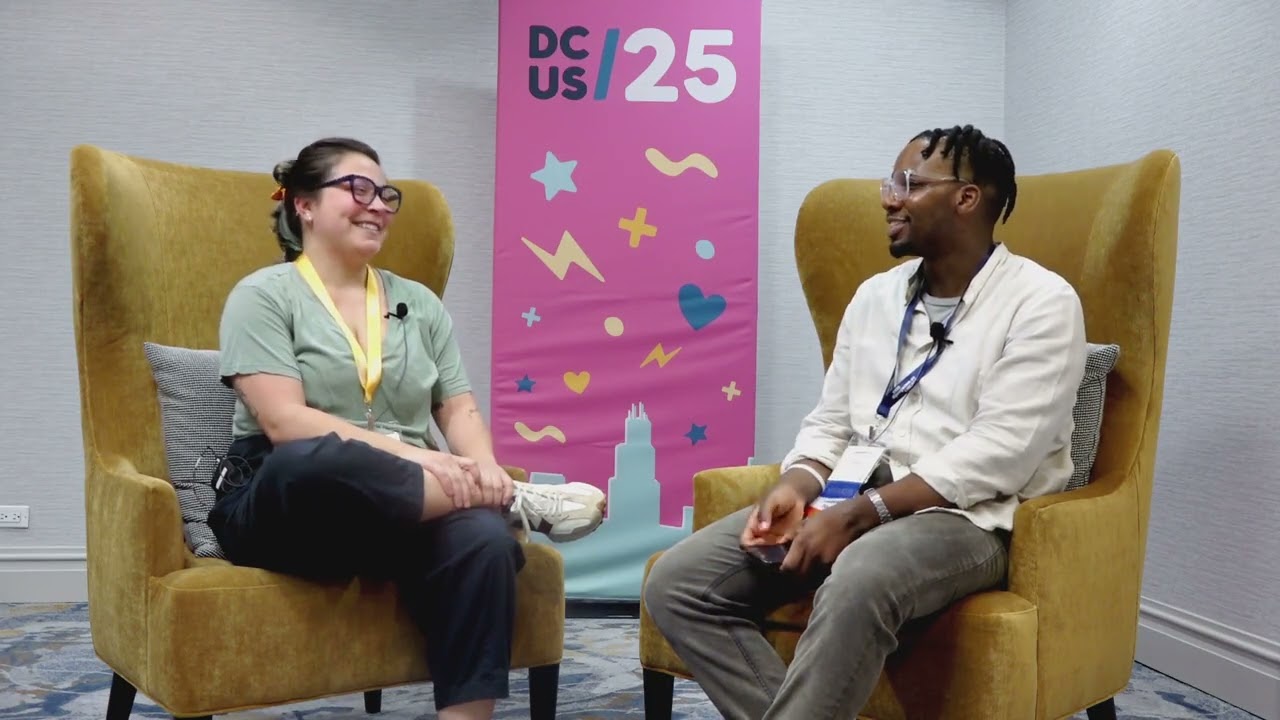
Creating an Inclusive Django Community with Kenya Phelps
Published July 15, 2026
DjangoCon US 2026
This video features Heidi White at DjangoCon US 2022 in San Diego, California, USA.

While astronomy and the study of the sky and Universe have been explored within a variety of global and cultural contexts, we tend to only see Western/Eurocentric astronomies in the classroom. Canada is built on Indigenous lands, on the erasure of Indigenous Knowledges and the attempted genocides of Indigenous peoples (Simpson, 2014). In the era of Truth and Reconciliation, there is an increased need for Indigenous Knowledges of astronomy to be seen and understood at all levels of education. This has resulted in much interest from both settler and Indigenous educators to be inclusive of Indigenous Astronomy Knowledges (IAK) in the classroom, but many teachers do not know where, or how, to even begin. In this talk, we will be debuting “Astrodigenous”, a newly developed online portal which provides teachers and educators with search-like access to a wealth of Indigenous sky-knowledge resources. Our presentation will provide an overview of the resources we've collected, a tour of the core features of our website, and demonstrate the functionality and utility of our search engine. We will highlight how our choice of Django as a web framework has uniquely facilitated the rapid development of effective web applications and database modelling for our portal. We will also describe new materials we have developed to guide settler K-12 teachers in exploring their own positionality with respect to the resources in our database and towards mindfully holding space for Indigenous Knowledge in their classrooms.
This talk was presented at: https://2022.djangocon.us/talks/astrodigenous-an-online-portal-for-sky/
LINKS:
Follow Dr. Heidi White 👇
On Twitter: https://twitter.com/heidiwhite
Follow DjangCon US 👇
https://twitter.com/djangocon
Follow DEFNA 👇
https://twitter.com/defnado
https://www.defna.org/
Indigenous communities across Canada have rich, place-based sky traditions, but colonial erasure and education systems often leave students familiar only with Western constellations such as Ursa Major. Heidi White explains how AstroDigenous addresses this gap by collecting Indigenous astronomy resources in a searchable Django portal, with curriculum tags, resource details, and a positionality guide to help teachers use materials respectfully and avoid appropriation. She describes how Django’s models, documentation, and built-in admin interface let her—despite having no web-development background—adapt the database quickly and share its management with a diverse team. The project is expanding its resource collection, seeking paid feedback from Indigenous educators, and considering Stellarium Web integrations so teachers can locate culturally significant asterisms in the sky.
Summarised automatically from the transcript.
Automatically transcribed, so expect mistakes in names and technical terms.
Speaker 1: So hello everyone. My name is Heidi White, like he said, and I am an astrophysicist at the University of Toronto's Dunlap Institute I am also an educator and a science communicator, and today I will be speaking on AstroDigenous, an online portal that I've developed in the past year with the goal of preserving Indigenous sky knowledges in Canada. And so I'd like to start off my talk by first motivating Astrodigenous as an initiative. So people around the world have long gazed up at the stars and searched for meaning in them. Humans by nature are pattern-seeking creatures, and what we see in these connect the dot patterns is largely due to cultural influences. That said, certain asterisms are recognized across cultures and time.
Speaker 1: And this is a likely example of one you're familiar with. You can see it here up on the screen. Does anyone want to shout out what this asterism is? The Big Dipper, yes. So asterisms are often part of larger constellations as we can see here. And one constellation that most North Americans are familiar with is Ursa Major. Now Ursa Major itself is derived from Greco-Roman influence. and its associated mythologies, which is really, really interesting because although it is known as Ursa Major to most North Americans, this is not a truly North American perspective But as I said, you know, these patterns and the connections between the stars are often shared amongst nations, multiple nations.
Speaker 1: So one example of a perspective that is, you know, these very same stars and it is place-based and linked with the cultures of the land is Mistamasqua. So in Cree legend, this was a huge bear that roamed over the lands. Another example would be Muin from the Mi'kmaq Night Sky story of Muin and the Seven Bird Hunters. So this story takes place in the northern sky. And it describes how these stars move around Thadapun, the North Star, as the northern hemisphere moves through the seasons. Now, this lack of non-Western perspectives is prevalent across educational systems, and despite it being a requirement in most provincial curricula Most Canadian children grow up never learning about indigenous knowledge systems.
Speaker 1: And so students leave the educational system with a very narrow perspective of their own local night sky As a result, this suppresses non-white non-Indigenous perspectives, but this is not a uniquely Canadian problem It's at the very least a North American one. And you know, the modern-day border between the United States and Canada is settler-defined, settler-established, and there is a rich, diverse representation of many indigenous traditions across the continent. Now, it's worth taking a moment to acknowledge that indigenous peoples exist across the globe And the vast majority have experienced systematic cultural erasure as a result of colonization. Now, I myself am not indigenous to this land, and so I wish to acknowledge my responsibility as someone who
Speaker 1: who has and continues to benefit from the ongoing process of colonialism, to learn and take ownership over how I can work to confront settler coloniality amplify the voices of Indigenous peoples, and create space to honor their knowledge systems. And this is something we should all be working towards So as I said in the intro, Astrodigenous is an online repository for Indigenous sky knowledge in Canada. And through our work, we aim to, in a very small way, address this issue of erasure, at least in Canada. So I've popped up a link. You can head over to our site. Feel free to check us out. And I want to highlight that the goal here is not just to connect teachers with these resources
Speaker 1: But support them in featuring resources related to Indigenous Sky Knowledge in intentional and non-appropriative ways And for us, we believe that this means ensuring that there are clear connections between the resource itself and the provincial curriculum goals And most importantly, that these resources are presented in a way which respects the indigenous traditions from which they are derived Now, one really important document that we've created to help us help teachers do this is a positionality exercise. I really won't go into this now because I don't have time, but you can feel free to ask me about this document in the breaks It invites teachers to explore their own relationship to the land, concepts related to decolonization, and their positionality with respect to resources in our database.
Speaker 1: And then we have our database of resources. So over the course of two years, four academics worked to compile a list of all the indigenous astronomy knowledge resources that they could find related to indigenous traditions in Canada. And they housed it all in this kind of chaotic spreadsheet with tons of tabs and different types of info about each of these resources. And so my job when I was hired at AstroDigenous was to take this spreadsheet and connect teachers with it. And I remember in the first team meeting when I was asking them what ideas do you have for how we could do this, one person offered, how about a really long PDF file? And I was like, I I think we can do better than that. So my thinking was that most teachers are familiar with Googling for resources for their classrooms.
Speaker 1: And so why can't we create like a mini search engine? And that's precisely what I did. So our search and request and or our search request and response is done entirely using Django. So now educators can navigate through the database via a Google-like search interface. Now, one way we've tried really hard to support teachers in being able to connect these resources with their curriculum goals is via a unique tagging system. So here each resource gets assigned content tags. Example include things like agriculture, animals sustainability, ecology, timekeeping. And here we see one example of Moon which pulls 22 results. Now another popular example is seasons, which conceptually is a huge part of early childhood education.
Speaker 1: And you can see in the results card at the bottom, hopefully you can see this, a view resource link So when teachers click on this link, they're brought to a page that has more details about the resource itself. And ultimately, the idea here is that teachers can use search to find resources which map to the concepts that they're teaching. And then they use our positionality guide to explore which of these resources that they find in their search results are best for featuring in their classrooms. Now of course everything that we have done here is completely public, so you can feel free to check out our repo on GitHub if you'd like. And that's Astridigenous. But this is DjangoCon, and so I'd like to explore now how Django played a really important role in making our search portal possible.
Speaker 1: So for the past decade or so I have been using Python for my own astronomical research. And so the fact that it was written, you know, it's basically Python meant that it was immediately familiar to me. It was accessible to me And one thing I want to mention is, you know, they talked about in the keynote the importance of lifeguards, so people who can bring in other people into development, into onto this platform. And so I just want to give a little shout out to my brother, a developer who is watching live from Chicago. When I realized I wanted AstroDigenist to have a web presence, he was the first person I went to for advice And so knowing my experience in Python, he was able to connect me with this platform and mentor me in working with it. So thank you to my brother Chris, but also to all the lifeguards out there who aim to bring in people into this community
Speaker 1: Now the biggest uh advantage for me for Django is that it got me up and running fast. And this isn't just because my supervisor gave me a deadline. So one of the ways in which it became most apparent to me was in how Django allowed me to conveniently model my data. So when I began, I wasn't actually quite sure what I wanted search to look like. In fact, none of us on the team did. And obviously the first step was to say, okay, let's do plain text searching through entries in the database. And so I set up a resource model. But then it evolved later in another team meeting to wanting a tagging system. This is something I could implement easily because all I had to do was create a tags model. It was slightly more complicated than that, but you get the drift.
Speaker 1: And then later we realized teachers would probably want to search by format, right? So boom, now we've got a format model and a languages model. And so for me, this whole structure made my life a lot easier because using Django meant that I could quickly adapt my database, the structure of it, as our needs were evolving. And they were evolving rapidly Now another reason I was able to get up and running so quickly is because of all of you. One of the best things about the Django framework is definitely its docs, I have to say. I've used a lot of documentation in my life and it's Absolutely amazing. There is detailed in-depth documentation on every aspect of Django and it also has amazing examples, tutorials, YouTube videos. And so what this meant for me as something of an outsider to Django
Speaker 1: was that whenever I got stuck, I always felt like there was a way forward, which is incredibly important. So I just want to say thank you to this amazing community of developers. You literally made it possible for a scientist with zero web dev experience to build a search engine in like two months. Thank you very much. And so the fact that I could get up and running quickly meant that I could focus on other things like my data, right? This database. Or rather, the cleaning of the data. You know, this was a more arduous process than I thought it was going to be, but I have to say it did give me a deep, profound appreciation for the lived experience of data scientists everywhere.
Speaker 1: Now another advantage of Django uh can be seen in the context of our team So we are a diverse group. In the top left you can see, well it's a little dark, but you can see Professor Hilding Nielsen. He is a Mi'kmaq astronomer in Canada. And he uh he began this initiative. Um he got the idea from it because teachers would come up to him and say, look, I really, really, really want to talk about indigenous knowledge in my classroom, but I don't even know where to begin and resources don't exist to support me And so you would say, actually, these resources do exist, but they're scattered all over the place. And so we need to put together a team of people who can, what they can do is they can compile all these resources together where teachers can use them. And so our team itself is comprised of primarily K through 12 educators and academics from Indigenous Studies and Geography.
Speaker 1: And I am the only scientist. And what this means is that I am the only person with any sort of Python familiarity or an understanding of how these databases are structured. So one thing I found incredibly valuable was the admin portal. Oh my! I love the admin portal because what this meant is that, you know, remember once I put this data structure in place, we now had hundreds of resources to tag. And so the fact that I could throw together an admin portal right out of the box meant that I could rapidly create this user-friendly interface so that the other members of my team can interact with this database. And this meant one, Heidi did not have to tag every resource. Yeah. Tops for that. Two, that we could have complete transparency in how the data was structured and tagged.
Speaker 1: And three, we could also have oversight and equal access to determining how this database evolves, which is incredibly important. So what's next for Astrodigenist? First is expanding our database. You know, that messy spreadsheet you saw has many, many tabs, much to my dismay. And only about half of our resources are currently accessible via our portal. So updating our database to reflect the full range of resources compiled by the AstroDigenous team is a top priority. This will also mean expanding our tagging system for all the new entries. And so one other really important thing is feedback. So now that we have this basic version of our online portal running, we're well positioned, right, to start soliciting feedback from professional educators.
Speaker 1: And in particular, this feedback phase is incredibly important for us because the Astridigenous team is primarily staffed by academics and educators from settler backgrounds, right? So we are most eager to hear the thoughts and feedback from members of the Indigenous communities in Canada because it is precisely their knowledge that this whole platform aims to center. In particular, Indigenous educators at the K-12 level are especially important as a demographic to get feedback from Because they can assess our platform both through the lens of an Indigenous person, but also a teacher in Canada. And this provides us, you know, a fulsome, holistic critique of what we built And so we have requested funding, cross your fingers for us
Speaker 1: to provide honorariums to educators as compensation for their feedback you know, properly compensating these educators is one of the most critical ways we can demonstrate the high value we have for their professional feedback and time And I also want to say that, you know, we recognize that while the portal was not created with the intention of teaching Indigenous peoples their own knowledge, it is the case, possibly. that members of these communities may consult our database to learn more about other traditions and reconnect with their own place-based perspectives of the night sky. So in scenarios such as these, it is absolutely critical that our site is welcoming and approachable to all users and it's designed in a way which truly honors the knowledge that it curates. So this is just another example of why feedback is incredibly important for us at this stage.
Speaker 1: And then finally, we're looking to incorporate visualization into our site. A majority of the resources in our database are examples of culturally rooted storytelling in relation to asterisms. And so it is incredibly critical. that when discussing these topics in the classroom, teachers feel capable helping their students navigate the night sky and locate these asterisms throughout the year. But due to the erasure of this knowledge, unfortunately most teachers and most Canadians, probably most North Americans, are entirely unfamiliar with the locations of these asterisms that are rooted in indigenous tradition. So, Stellarium is an open source software project that allows people to use their home computer as a virtual planetarium And they've recently launched Stellarium Web, which allows you to run Stellarium in the browser and embed this planetarium instance into a website
Speaker 1: And so one thing I'm really, really excited about is the idea that we could connect each of these resources in our database with a Stellarium instance. And so for example, we could embed links in our resource page, that each resource page, which will generate Stellarium web instances on the fly and will allow teachers to see exactly where these asterisms are on their night sky. Now, admittedly, it is a bit ambitious, but again, it is something that I'm really, really excited about and our team is very excited about. And we hope with these new additions that we are working our way towards a fully realized platform which can help confront this issue of erasure of indigenous sky perspectives in Canada and build awareness of these knowledge systems. So that's it for my talk today.
Speaker 1: I hope I've been able to create some excitement in you for what we're working on at Astro Digenous. And my hope for this talk also was to provide you with perhaps a different kind of use case for Django as a platform and also to say a simple thank you to the community for what you've built and what it's made possible for us at Astro Digigenist to accomplish. So with that, happy to take some questions.
Speaker 2: Thank you for your talk. You are now no longer an outsider to the Django Con Django community, so welcome. Question was um what was the hardest thing you had encountered trying to use uh Django?
Speaker 1: What's the hardest thing? Um that is a great question. Trying to think back. Um I actually don't think that there were huge like hurdles that we faced. It was actually Yeah, I don't remember any sort of major hiccups that I had to work around. I think, I guess for me, um it was, you know, I I don't have development experience, so I feel like there's a lot of jargon, right? So there's this views and you know, all these different scripts and and and so um models, set like all these sorts of things together, understanding how they work together. I I will admit that I definitely had to seek out quite a few YouTube videos which kind of
Speaker 1: helped me understand how all this jargon fits together, the relational way in which uh Django works. And so that's probably the one thing for me conceptually that it took me a bit of time to get used to. But yeah.
Speaker 2: Other questions? Yes, what about
Speaker 3: Were there any other projects that you looked to for inspiration, or are there other projects out there like this that you know of for other types of knowledge like agriculture?
Speaker 1: Yeah, so um that is a great question. Um I would say so one thing to keep in mind is I came into Astro Digenist after um the the spreadsheet, I guess you could say the work, the hard work had been done to put together these resources. Um and so I you know the thing is to our knowledge at least for in Canada there is no initiative that we're aware of that actually is working to put together this knowledge in one central place. And in terms of like other similar initiatives, I would say that, you know, personally, I was just saying to the MC that I went to a conference this summer. It was a general assembly of the International Astronomical Union and I did meet with people from example, for example, from Australia who were looking to do something similar
Speaker 1: with indigenous astronomy knowledge, but in terms of other arenas like ecology, sustainability, agriculture, I'm not connected with anyone, but that's in particular why we've put together We've made the repo public, right? So we want to we've put together the work to set this sort of database up and search and so we've put it out there freely so that other groups can use it in in in different contexts, certainly. Yeah
Speaker 2: Which is a good little lead in here. You said you're open source and you're looking for help. What sort of help are you looking for?
Speaker 1: So so one thing I would say, uh and part of why I'm here at this conference is because, you know, I've only been working with Django for like eight months, right, altogether. And so I am totally aware of how many resource or I would say features there are to Django that can make people's lives easier, especially in doing web development. But I'm not familiar with all of them. I know there's lots of them, but I'm not familiar with them, only the small, you know, area in which I've sort of explored And so what I would love is people to provide me feedback and say, you know what, there's this tool, there's this sort of thing, different aspects of using Django that can help me point me in the right direction, especially, you know, I've mentioned ways in which we want our site to grow. If you have any ideas of how we can further use the platform to make those
Speaker 1: those goals, like how we can accomplish those goals, please reach out. I'd love to hear.
Speaker 2: Are you here for Sprints?
Speaker 1: Huh?
Speaker 2: Are you staying for the sprints after on Thursday and Friday?
Speaker 1: I have not signed up.
Speaker 2: You have not signed up. Okay.
Speaker 1: But uh yeah, I'm I'm here for the rest of the year.
Speaker 2: In which case, hey, anyone looking for a sprint topic? There you go. Do we have any other questions? Yes.
Speaker 4: Uh I'm curious, uh also amazing to hear that you didn't run into too many showstoppers that at least, you know, go to the top of your head at this point. Um but I'm curious, given there's a parallel talk right now talking about making deployment easier for people who are new to Django. So I I kind of Maybe as an add-on to that question, I wonder what sort of support you had in like deploying this, keeping it running, maintenance, which is usually like a whole Another can of worms that the Django docs don't really address.
Speaker 1: Yeah. So I mean if I can be frank, the person maintaining it is me I I am the sole person who sort of works on on this, at least this area of Astro Digitalist. As I said, most of our team members have no experience in this arena, and so they've sort of likes the fact that it's created, but they've not been able to necessarily they've worked on other things like our positionality exercise, right? And how to support teachers And so right now it's currently just me maintaining it. And the process of maintaining it, you know, it's helping me learn more about web development, to be honest with you. So for example, I would sort of just, you know, I was recently told by my brother, like, you can't just commit everything right away and push it and that kind of thing. You have to test and make sure it works.
Speaker 1: You break things, which I did yesterday. I did break it yesterday Okay, yeah, thank you very much. Fixed it too. But in any case, I'm yeah, I would say that I'm I'm still exploring that.
Speaker 2: Okay. Well we do we do have more questions? Uh
Speaker 5: thank you for sharing. Uh I was glad to learn about something that I don't know much about so um I appreciate that and thank you also for sharing your perspective as a new person to Django. Uh you know for those of us who've been in a long time it's It's interesting and refreshing to hear, you know, what what new people are coming to the platform, what their experience is, because sometimes we have no idea and like you said, all the jargon.
Speaker 1: Yeah.
Speaker 5: Um I was kind of ki curious about the the um the data processing or you know did you find any tools or use any processes to help you you know sanitize all the data or is it has it just been a completely manual process?
Speaker 1: It has been an entirely manual process and actually for me one thing that was probably the most challenging thing of this this project that I've been working on has been the fact that I I did come into it after the resources were all collected. And so um what I wanted to include, I mean there are so many columns, so many tabs. What I wanted to include in the database, what was the relevant pieces of information? You know, that was something that It was in through cleaning the data that I actually realized what I wanted to include, if that makes sense. So it's a very manual process for me. It was literally sifting through a spreadsheet. But there there were, you know, one thing's one thing that we are dealing with also is varying spellings for different things and how to connect those within the database so that we don't have multiple redundant entries
Speaker 1: and you know, a single resource tagged a whole bunch of times, which is spelled slightly differently. So we do have some challenges. Yeah
Speaker 2: I think we're probably actually at time at this point, so if we have more questions we can follow up in the hallway and so on for the uh post of the conference. Uh a small token of appreciation from the organizers. Thank you very much.
AstroDigenous is a public online repository and search portal for Indigenous sky-knowledge resources in Canada. It aims to counter the erasure of Indigenous perspectives by helping teachers use these resources in curriculum-connected, respectful, and non-appropriative ways.
Discussed at 3:32Educators can search the database through a Google-like Django interface using tags such as the Moon, seasons, agriculture, ecology, and timekeeping. Each result links to a page with more information so teachers can identify resources related to what they are teaching.
Discussed at 5:57Django let her, despite having no web-development experience, build a working search engine quickly and adapt the database as the project’s needs changed. Its documentation, tutorials, and examples helped her overcome unfamiliar concepts and jargon.
Discussed at 8:30The built-in admin portal gave the wider team a user-friendly way to tag and manage hundreds of resources without requiring everyone to understand Python or the database structure. It also provided transparency, shared oversight, and equal access to how the database evolves.
Discussed at 11:38The team plans to add the remaining resources, expand the tagging system, gather feedback—especially from Indigenous educators—and compensate contributors with honorariums. They also want to connect resource pages to Stellarium Web so teachers can see where culturally significant asterisms appear in the sky.
Discussed at 12:28The main conceptual difficulty was understanding Django’s terminology and how views, models, scripts, and its relational structure fit together. Heidi used YouTube videos and other resources to build that understanding.
Discussed at 17:09The speaker was not aware of another Canadian initiative centralizing Indigenous astronomy knowledge, though she had met people in Australia exploring something similar. The public repository and search system were deliberately released so groups working in areas such as ecology, sustainability, or agriculture can adapt them.
Discussed at 18:27The project would benefit from advice about Django tools and features that could support its planned growth. Heidi invited people to suggest ways the platform could help implement the site’s goals and to contribute through collaboration or sprints.
Discussed at 19:45Heidi is currently the sole person maintaining the Django portion of the project, while other team members focus on areas such as the positionality exercise and teacher support. Maintenance is also how she is learning deployment and development practices, including testing changes before pushing them.
Discussed at 21:26The process was entirely manual: Heidi sifted through a large spreadsheet to decide which information belonged in the database and to understand the data’s structure. A continuing challenge is reconciling inconsistent spellings so resources do not receive redundant tags.
Discussed at 23:03Note: We understand that names change, people change, and bodies change. We respect each individual's journey and privacy. If you have any concerns about a video or need us to remove content, please don't hesitate to contact us. We will handle your request with care and promptly address any issues.
Published July 15, 2026

Published July 15, 2026

Published July 15, 2026
Published July 15, 2026
Published July 15, 2026
Published July 14, 2026