
0:26:22
Automating initial deployments with django-simple-deploy with Eric Matthes
Published October 23, 2025
This video features Eric Matthes at DjangoCon US 2026 in Chicago, Illinois, USA.
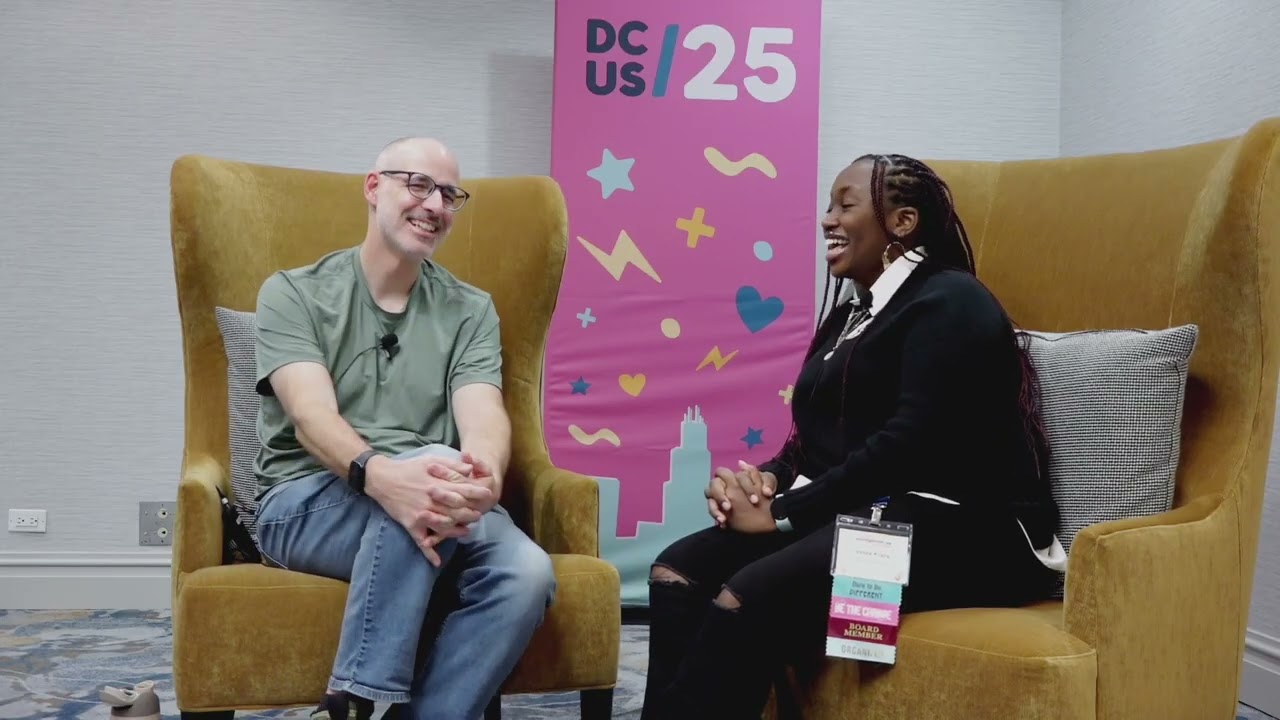
In this conversation from DjangoCon US 2025, Eric Matthes reflects on his journey from high school teacher to software developer, author, and longtime member of the Django community.
Eric shares how Django helped him build tools to support education, how the framework has evolved over the years, and why writing, teaching, and community remain central to his work. He also discusses approaching technology with curiosity, embracing lifelong learning, and the value of sharing knowledge with others.
Whether you're new to Django or have been part of the community for years, this conversation offers thoughtful insights into learning, teaching, and building software that makes a difference.
Recorded at DjangoCon US 2025 in Chicago.
Learn more about DjangoCon US:
🌐 https://2026.djangocon.us
Eric Matthes traces his path from teaching high school and building student-support tools with early Django to writing *Python Crash Course*, designed to teach the minimum needed to create meaningful projects and deploy them. He says deployment options have changed, but making a working web app available to others remains central; he values Django’s mix of technical expertise and empathy, and uses his Mostly Python newsletter to share a wider range of ideas. On AI, he argues that tools can help when learners understand and verify their output, but beginners should first write code, make mistakes, and build their own understanding. He describes a book as a promise to take readers from a defined starting point to a useful destination, and encourages writers to keep testing whether they still deliver on that promise—and to stay curious through change.
Summarised automatically from the transcript.
Automatically transcribed, so expect mistakes in names and technical terms.
Speaker 1: Hi, my name is Velda Kira. I am currently at JingleCon US 2025 in Chicago. Today is day three, Wednesday, the dip dive day. And with me today I have Eric who is an author and a bird watcher and is also attending the conference. Hi Eric.
Speaker 2: Hi, thank you for having me.
Speaker 1: Anytime. So are you excited for your talk?
Speaker 2: I am. I'm that like I feel like that healthy mix of excited and nervous. Mostly excited.
Speaker 1: Yeah. How long have you been speaking at Jingle Con US?
Speaker 2: I f uh think I always forget if it's twenty twenty two or twenty twenty three. I think it was twenty twenty three. Yeah.
Speaker 1: And what keeps you coming back to the conference to speak or even just attend the conference
Speaker 2: Oh boy, like how far do we go?
Speaker 1: As far as you want to.
Speaker 2: Okay, so thinking about this conversation brought me back to like where did I really come into the Django community. And for me it was back in like 2008 because I was teaching high school and I was starting to realize that I had enough programming skills to build some tools that would help us on the teaching and administrative team like serve students better. Um and I built I remember building a tool, I think it was um It was probably something for managing learning standards, the learning targets that we wanted our students to meet and letting them see their progress before they were being measured and evaluated. Um and so I had that classic experience of building something that worked and then I needed to deploy it and I was like, what am I gonna do? And even before that was the choice of um what am I gonna build it in?
Speaker 2: So I remember looking at different frameworks and different languages and I'm so grateful that I found Django as early as I did, um, because even though I started to hit some obstacles, um like the Django uh framework and the Django community was um a world that I could continue to make progress in.
Speaker 1: That sounds exciting. And you have an education background. How does uh Django now tie up to like b being in the education system now figuring out like you said you had to come up with like say a deployment checklist which I think Jeff has also referenced that on the panel that he was on. So would you walk us through from uh the need that you had to the int implementation process and how that has changed over the years?
Speaker 2: Yeah. Um so two thousand eight ish I think I was using Django one, two or three ish. Yeah. Like before migrations were formerly part of Django. Um and so my first deployment was literally a laptop um that I closed the lid on and did not suspend and put it into a closet in my classroom. Yeah. Um unfortunately I had an IT department that was fine with that. They they liked they supported innovation. And so uh as long as we were transparent, they let us do that. I'm grateful for some of the hardships I've had around that, like because it was a really uh clarifying experience of you know what are the challenges that people face when they have good ideas but don't have, you know, the the right kind of expertise. So I got to watch Deploy
Speaker 2: Make It Easier around like Heroku and then some other platforms. And then for me the big change was um I got invited to write a book in 2013 and I had been trying I had been teaching math and science. Um but I would teach programming whenever I could. Little subversive uh thing. Um But uh I really liked how making an intro programming class an optional thing for students lets everybody who's curious just come in and try it and with very little of the academic pressure that that makes it um harder for people to engage fully. So I was looking for a book that I could teach, that I could let my students work through and just answer their questions so they could work at their own pace. And around that time, um, all the books that were available either kind of spoke down to you as a little kid
Speaker 2: or made too many assumptions about what you already know. So I ended up writing the book that I wished I could teach from. Um and my guiding principle of my book was what's the least I need to know what's the least you need to know in order to start doing uh your own meaningful projects. Yeah. And one of those projects was a Django project. Yeah. And I took it all the way through deployment because I knew that um while it's satisfying to build something that works on your computer, particularly with web frameworks, it's only really satisfying if other people get to use it as well.
Speaker 1: And I like that you brought your book up. Um what has changed from the original version or from the old version to the current version that's available right now?
Speaker 2: Oh lots of things. Um I'll keep so the book is Python Crash Course. Um it's really two books in one because the first half is an introduction to Python with that curated question of like what's the least you need to know um in order to like be able to move forward and and learn all the rest of the things that you you will need to know.
Speaker 1: Yeah. Um
Speaker 2: but that last project in the book is a Django project, um and people deploy it. And so that has that has put me in a position of watching how the deployment story in Django, the initial deployment story in Django for 10 years now. And in some ways it's gotten easier. In some ways, like for people who don't know a lot about deployment, it's not all that different. And maybe it's even worse. Because in 2015 we had git push Heroku main as a workflow and you had to do some configuration, but like Heroku had this amazing free tier. Um and
Speaker 1: before it won it away.
Speaker 2: Yeah, and honestly it was probably too much of a free tier.
Speaker 1: Yeah. Um
Speaker 2: but that made it easy for people who could make something work on their computer uh made it possible I should say for somebody who could make something work on their computer, make it available to other people. Which is the whole promise of web apps.
Speaker 1: Yeah.
Speaker 2: Yeah. And now like there's no fee tier, you still have to do that configuration work yourself. There's a even wider choices about how to deploy
Speaker 1: Yeah. I mean those are all like good considerations to have and also objectives to have when you're writing a book and considering all the outcomes. And I like the fact that he also pointed out like at that time the books weren't really that good for the audience that you were actually targeting or rather in this case maybe that was even you and what you wanted to know. So you also run the a newsletter as well. How does that complement now the book?
Speaker 2: Great question. Um to kind of clean up that kind of rambling about deployment and stuff, um, you know, you you started this with the question of like what keeps me here.
Speaker 1: Yeah.
Speaker 2: Um I love that the Django community is this mix of people who know way more about deployment than I do and do way more complex stuff than I will probably ever get involved in And I can listen to them and I get like intellectual curiosity satisfied by listening to what they're wrestling with. Yeah. And So many people who are empathetic towards um people trying to do things and learn things who don't have all the experience. And so this this community just brings together technical expertise and Like good people, empathetic people. And so it's just a joy to to keep coming back to you. And I was told that before I ever I started going to PyCon before I went to DjangoCons.
Speaker 1: Yeah.
Speaker 2: And people said you should go to DjangoCon. It's like an even like distilled version of PyCon Yeah. And it's held true for years.
Speaker 1: Well, and you still keep on coming back. I think thank you for continuously also pouring in in form of creating resources for people who are learning Django. And now that you're having a talk, would you like to give us a sneak peek of your talk? Um
Speaker 2: Yeah, I I would like to answer your question. You you asked. You asked about the newsletter and I started a newsletter. It's called mostly Python And I started that because I got you know, my book does really well, but it keeps me just writing about the same thing all the time and thinking about the same topics and I'll do that forever, for as long as people are reading it. Like the the real picture there is people learning. Um and You know when when you learn how to program and you learn to build things that changes your life because you you gain power and you gain control and you can create things Um but I started a newsletter because I wanted to write more regularly again about a wide variety of of topics. And so it's been fun because I I do get to just like oh as I'm working, oh this thing like I struggled with it, I'll share it with other people.
Speaker 1: Yeah. And should we expect you to come up with a new book? Are you trying to write something new?
Speaker 2: I don't know. Um So the thing with uh writing a technical book is that you need to rewrite it every few years. And somebody asked me this week, so do you really rewrite the whole thing? Yeah. And No, I I work from um copies of the previous edition, but I do I make myself mentally wet just like clean and say, if I were writing this book fresh today
Speaker 1: Yeah.
Speaker 2: Would I do it the same way because I don't want it to just become stale? Like Python about Python. Python is not the same today as it was in twenty fifteen. Exactly. And the world isn't. And so I I try to make sure like an introduction to Python in twenty twenty five, what should that look like in book form? And that's the the new edition that I attend to write each time. So it gives me keeps me on the cycle of like I have this full-time or more than full-time work. for six to eighteen months every three to five years and in between I write other things, I do programming projects, I go hike and climb.
Speaker 1: Go bird watching.
Speaker 2: Birdwatching, yes.
Speaker 1: How does bird watching complement what you do in Python and in education in general? Oh
Speaker 2: boy. I feel like everybody is a latent burger.
Speaker 1: I mean you told me this and it seems like it was sort of true.
Speaker 2: Yeah.
Speaker 1: Yeah.
Speaker 2: Yeah. Um, I got into birdwatching because um when I was nearing the end of my classroom teaching career, I got I had to teach certain science concepts But I could choose any context I wanted. And I'd always wanted to do a birding class. Yeah. And I taught a birding class and suddenly saw birds that I had lived around for twenty years and never noticed. And so that's the that's the story with birding. Um people I watched um somebody give a presentation in my community about how to get started in birding and people thought he was gonna talk about binoculars and cameras and stuff. And his his stuff was be quiet, observe, listen. And he said everything else will follow. Um and that's true. And that's what that's what people do when they start birding. Yeah. They either intentionally start to do those things or they do those things and they notice the birds and that's what
Speaker 2: I'm going to do. pulls everybody in.
Speaker 1: Oh, I mean I felt pulled into it and I wasn't even trying.
Speaker 2: Yeah. So it it relaxes me. I like the natural world but also like the Merlin is amazing. Yeah. For anybody unfamiliar with it, it um you Turn it on on your phone and it listens to the sounds around you and it uses machine learning to identify uh which birds are around. And You shouldn't trust it to tell you like that bird is there, but it tells you what to keep an eye out for.
Speaker 1: Yeah.
Speaker 2: And for me the bigger picture in this in this community is that that's a shining example for me of like what the promise of everybody having a computer in their pocket should have been. Things that just make our lives better, not worse. Um and so I I do enjoy talking about that in in the in this community and in this content.
Speaker 1: I love to still hear about birds and I know you've seen a lot more birds than I last saw you and I'd love to hear more about that. But now the other question is that now that you already have an existing book and you still run a newsletter and now even in the age of AI, how does your content adapt to the current changes of the language or framework?
Speaker 2: Oh, good good question. And I think about this all the time. And I like the cycle of PyCon Jingo Khan Um because they're six months apart and so I feel like I get these in-depth check-ins with a bunch of peers in this community face to face every six to twelve months. So it's really it's a good cycle for like checking in like where are things going, where do we think they're going to go Um, I feel like it's become clear that um the AI assistance and tools that we have um Okay, I'll take a step back. So Marlene gave a keynote this morning.
Speaker 1: Yeah.
Speaker 2: And one of the things she said is these tools are flawed, but they are useful.
Speaker 1: Yeah.
Speaker 2: And I think that's a really good statement, and I think it's well worth repeating Because we have the people who are saying they're so flawed nobody should ever use them. We have the hype that says they're so useful that you should only use them. Reality is always in the middle So I've seen as a teacher, as a writer, as a programmer, the tools are good for things that you know, that you understand. And for me, like um I use them all the time for programming.
Speaker 1: Yeah.
Speaker 2: And I use them as a guide and I verify everything and I can do that. I'm trying to learn music. Mm. Exciting. learning piano, learning guitar, and I've found that I can't use AI assistance to learn much about music because I don't know how to check where it's accurate and not.
Speaker 1: Yeah.
Speaker 2: And so what that means for for programming is that people really need to do people really benefit from learning some things outside of AI yeah and then starting to use the tools and And so, you know, if AI made books unnecessary, made teachers unneeded, I would face that reality and move on. Um, but they it they haven't So far and it's kinda hard to see them actually doing that.
Speaker 1: Yeah.
Speaker 2: Despite the hype that that we hear from the owners of the companies.
Speaker 1: Yeah, and for s people who are starting out, how would you advise them in this moment? modern age of how would they better uh get benefit from using AI tools as they learn. Do you have any hack that you'd like to share?
Speaker 2: Yeah, a really clear thing that I hear consistently is that people need to type out code. Um and I think if we talk about like somebody brand new and so they're cracking open my book, they're like watching video zero of a course, they're just starting in in a learning journey. Um you have to write code even though the AI tools are good enough to write beginner code.
Speaker 1: Yeah.
Speaker 2: Um because you need to go through the process of writing things out, seeing what the results are. um making mistakes, seeing what the computer does when you make a mistake, figuring out how to troubleshoot that, and then you can start to bring um AI assistance and tools in in a way where you're understanding what that tool is doing for you and how to kind of use it as a partner and not as a replacement of your own thinking. Mm.
Speaker 1: And that's kind of like hard to do right now because everybody is for you could why are you using Google or why you trying to research through books and through other resources, why don't you just ask AI?
Speaker 2: Right.
Speaker 1: So what would you tell somebody who's also trying to research and trying to still leverage all these other resources on top of AI or chatbots and chat agents? Um
Speaker 2: I'm not sure. I think okay, so we had a couple of talks uh AI is a Now a thread in every tech conference. Um and we had a couple talks this week that represented what AI actually is. How does it work? What is a token? How does it break a question or a prompt into tokens and then like do some analysis and give you back something that is a reassembly of tokens which are like pieces of words and a simplified way to think about it. Um we need to like keep putting that out there and keep showing people that these aren't just stochastic parrots. They're not just like randomly reassembling tokens, but they're also not conscious and they're not thinking and they don't have intent. Yeah. Um and so um where do I go with that? Like
Speaker 2: People should develop their own understanding from sources they trust and not the AI hype people about how these things work. But they can do what their limitations are. If you if you have some clarity around that, then you can start to figure out how to use it in your learning in a way that's gonna let you move forward and not give you the illusion that you're moving forward. And I'll I'll take a step back. Like I started teaching programming in like the mid-2000s. And people then were like reluctant to teach kids in terminals because kids don't really want to just print something to a terminal. I have found throughout my life, people who are not programmers, if they can do something in a terminal and it works, they feel good.
Speaker 1: Yeah.
Speaker 2: Um and so Like um all throughout history, people who truly want to learn something, most people are okay to be like do really basic stuff and build their understanding from that and then and move forward
Speaker 1: Yeah, and that sounds like really good advice to people who are also trying to learn in this very uncertain age Yeah. And my other question is more into now your writing and how you already have a book. Thank you for signing my book, by the way.
Speaker 2: You're welcome.
Speaker 1: I I so I the the reason why I actually write I like your book is that you could also use it as a reference point. Like you don't just finish it and pack it up in the shelf. It will be like, oh you talked about this and I remember reading this particular line. Let me just go and research it and figure out, okay, what's what's going on? Am I not getting it correctly And so for new authors who are also trying to figure out the balance whether they even need to write a book initially, what advice would you give them when they're starting out as authors? So that's the first part of the question. The second part is that now for seasoned authors, how would they continuously change your content to adapt to
Speaker 1: different changes of the ecosystem?
Speaker 2: All right. So I have a pretty clear answer to this. Yeah. And at PyCon this spring there was an um authors panel.
Speaker 1: Yeah.
Speaker 2: Um and typically I've done my own open space where I say anybody who's interested to my book like come we'll have a conversation. And this time there was an an author's panel so it was it was much more adjournable to be part of that panel and have this shared conversation about writing in general and people reading in general and make of that. And the message at Hammer Home is that uh like a book is a promise.
Speaker 1: Yeah. Uh
Speaker 2: it says if you start here with me, I will take you here.
Speaker 1: Yeah.
Speaker 2: And I'll leave you in a place.
Speaker 1: Yeah.
Speaker 2: Um and so Um, where does that promise start? It starts with a proposal. And so if you are going to write a book and get it published by a traditional publisher like No Starch Who I Write With or O'Reilly or Um any of these um established um publishers, they require you to submit a proposal. You don't just submit a 500 page book. Um and the proposal says like Uh what is your idea? Uh describe in like one to three sentences what your book is going to be. Who is your audience? Um what other books currently cover this topic? Um, how is your book going to stand out in that? And it can sound to people like that that's all marketing, but what it really is is say like why does the world need your book? Yeah. Why do you need to write this and why do other people need to
Speaker 2: to uh read this? Yeah. And so if you can craft a a strong proposal and not just one that sells your idea but one that like answers those core questions. Why do we all need this book If you can do that, that's your promise. I promise if I write this book I will deliver that. I promise if the book gets published and you start here with me, I will get you there and you'll be able to do something. Um and so Um in that room that really resonated. And people say ask questions like, how do I market my book? And my answer is like, go back if you have that solid proposal and that promise. You can your marketing is communicating that. If you don't have that, no like Facebook advertising program is gonna give you an audience Um and so to
Speaker 2: to bring it to your question of seasoned writers, um I have watched okay, my commitment was if I go through the the process of Doing all that work is like years of work. I thought I was gonna write my book in six months and revise it in the next six months. It was two and a half years of and everybody has that story. If I'm going to go through all that work, then I'm going to pay attention to every bit of feedback I get.
Speaker 1: Yeah.
Speaker 2: And look for what are the ways I could improve this so that other people get that original better experience that I was intending for them to get out of it. And so for seasoned writers it's continuing periodically reevaluate what was your promise.
Speaker 1: Yeah. Um
Speaker 2: Did you meet it? How are you st is that promise still meaningful in today's world? Yeah. And are you still meeting it and how can you continue to meet it in the current context? And w what I'll say to kind of expand on that, because it's not just about if you're going to um write for a traditional publisher. When I started my newsletter Nobody required me, but I wrote my own proposal to myself to make sure that I was answering those questions. Is this really serving a need? Where does it fit in? Um And so those those are the ways of thinking, and this comes from a teaching background of like, where do you want the people you're with working with?
Speaker 1: Yeah.
Speaker 2: To get what powers do you want to give them? What knowledge? What understanding?
Speaker 1: Yeah. And I never really thought about newsletters having like a proposal like as you mentioned, would you like to talk more about w how the proposal looked like when you started the newsletter and if that has changed today? Sure. Um
Speaker 2: my personal reason for starting a newsletter is I wanted to write on a regular basis again. Yeah. And with a more immediate audience, because writing a book is satisfying, but like It takes a long time. Well you don't get feedback for like three years or something. You get feedback from the editors and stuff, but you don't get uh real-world people. Testing your book. And so with uh I missed online writing. I missed hitting publish um and people read it immediately. And the um the revision cycle So you can take feedback and you can revise your stuff immediately and make it stronger. But my promise for the newsletter to an audience was, um, I'm just gonna share my perspective on like the overall Python world.
Speaker 2: And it's really like the core audiences, you've started to learn some things about Python and you want to know what's happening in the Python world and some Snippets from real-world projects and real-world work about like on an ongoing basis. How do we all how do we all um continue to use Python in better ways
Speaker 1: I mean I feel
Speaker 2: that that was rambly. I feel like
Speaker 1: No, I mean that was still like very good because in a way we kinda like assumed like a newsletter would be like somebody just being creative and just putting content out there. I think it's beautiful or other enlightening to see that there is a lot of work that also gets done behind the scenes to actually m make the content that we see specifically written content, even if it's newsletters that are published once or twice. in in a month and thank you for highlighting that. And the last question before you sneak out to your talk.
Speaker 2: Yeah.
Speaker 1: What would you change now or what would you tell Eric who was inexperienced and who was just starting out and figuring out whether they even wanted to code or even move from teaching or even try to do something different. Ha ha.
Speaker 2: You know, one of the the questions I've enjoyed. Okay, in teaching we always Give stud our students prompts, fun questions like that. If you could live forever, how long or if you could choose the length of your lifespan, how long would it be? Thousand years, ten thousand years, infinite. No, probably not.
Speaker 1: Yeah. Um
Speaker 2: so one of the questions I've liked is if you go back in time and have dinner with one person, who would it be? And people name famous figures from h history and I couldn't pick one person, but one of the people I do name is like myself at six years old.
Speaker 1: Oh really?
Speaker 2: 'Cause I grew up before videos and stuff. And so like Some people from my my age group have like old VHS videos. Um from the childhood. I don't have any videos of myself as a kid. So I have pictures. But I have never heard myself as a kid talk My kid is a four my son is fourteen right now. Um and he has seen videos of himself as a toddler. And so his memory Of himself is different than mine.
Speaker 1: Definitely.
Speaker 2: And so I'd be curious it's not just like oh, celebrate myself. I'd be curious to like taught listen to myself as a six year old and like hear like am I hearing things from that six year old yeah that I recognize as like have are still there?
Speaker 1: Yeah.
Speaker 2: So to answer your question more directly, I wouldn't go back and tell myself to do anything any differently because I always made decisions around what am I curious about, what do I want to do in the world. And that ex explain exploration mindset has kind of like led me on the path that leads me to this chair and like did I could not have predicted that I'd be sitting here with you. Or at this conference. Yeah. And so Yeah, the that's why I've liked teaching though. Like f I went into teaching because I loved learning because I was curious. And so I went into teaching to help foster curiosity in every student I ever met.
Speaker 1: Yeah.
Speaker 2: Um and it's been a joyous life and you can't predict where it goes.
Speaker 1: You're you're having fun, it seems. A l a lot of fun And thank you for coming through. I also really like your answer because it shows that in every stage of your life you have the best resources to make the most of. the choices you had and in saying that you wouldn't change anything is to say that everything happened as it as it it was supposed to happen based on the information you have.
Speaker 2: Yeah and it's uh you know I recognize it's privilege in that because there are you know I did not I've had some hard experiences and you know some of my health experiences and whatnot But I did not have uh trauma imposed by other people, just to phrase it one way. And so I recognize it's a pretty privileged place to say like I wouldn't change anything about my life. Yeah. Um but the bigger picture of like, you know, would you give yourself a stock tick tip at ten years ago? Or would you give yourself like learn this thing?
Speaker 1: Yeah.
Speaker 2: Uh the clearest thing I'd communicate and this is part of why I would like be kinda hands off. Oh yeah. Just like curiosity. Like stay curious. Even when things are hard. Um Don't lose that curiosity, even if you have to put your head down for a while to deal with some things.
Speaker 1: Yeah.
Speaker 2: Because curiosity guides humans
Speaker 1: Yeah. So thank you for that. I hope you enjoy your talk. I'll be in the audience making fun of your changing of your glasses every time. And thank you for coming through. I hope you enjoy the rest of your comment
Speaker 2: All right, thank you, Pat.
Early on, Eric ran a Django project on a laptop in his classroom closet. Heroku later made deployment much easier with a simple Git push and a free tier, but today there are more deployment choices and users generally have to handle configuration themselves.
Discussed at 4:56Eric recommends writing code yourself first—making mistakes, seeing the results, and troubleshooting—then using AI as a partner once you can understand and check its suggestions. AI is most useful when you already know enough to verify its answers.
Discussed at 13:48A proposal should clearly state the book’s idea and audience, what similar books already exist, and how yours will stand out. Eric sees those answers as the book’s promise to readers about what they’ll be able to do after reading it.
Discussed at 17:52Note: We understand that names change, people change, and bodies change. We respect each individual's journey and privacy. If you have any concerns about a video or need us to remove content, please don't hesitate to contact us. We will handle your request with care and promptly address any issues.

Published July 15, 2026

Published July 15, 2026

Published July 15, 2026
Published July 15, 2026
Published July 15, 2026
Published July 14, 2026
