0:06:39
Leading the Django Software Foundation and Building Open Source with Thibaud Colas
Published July 15, 2026
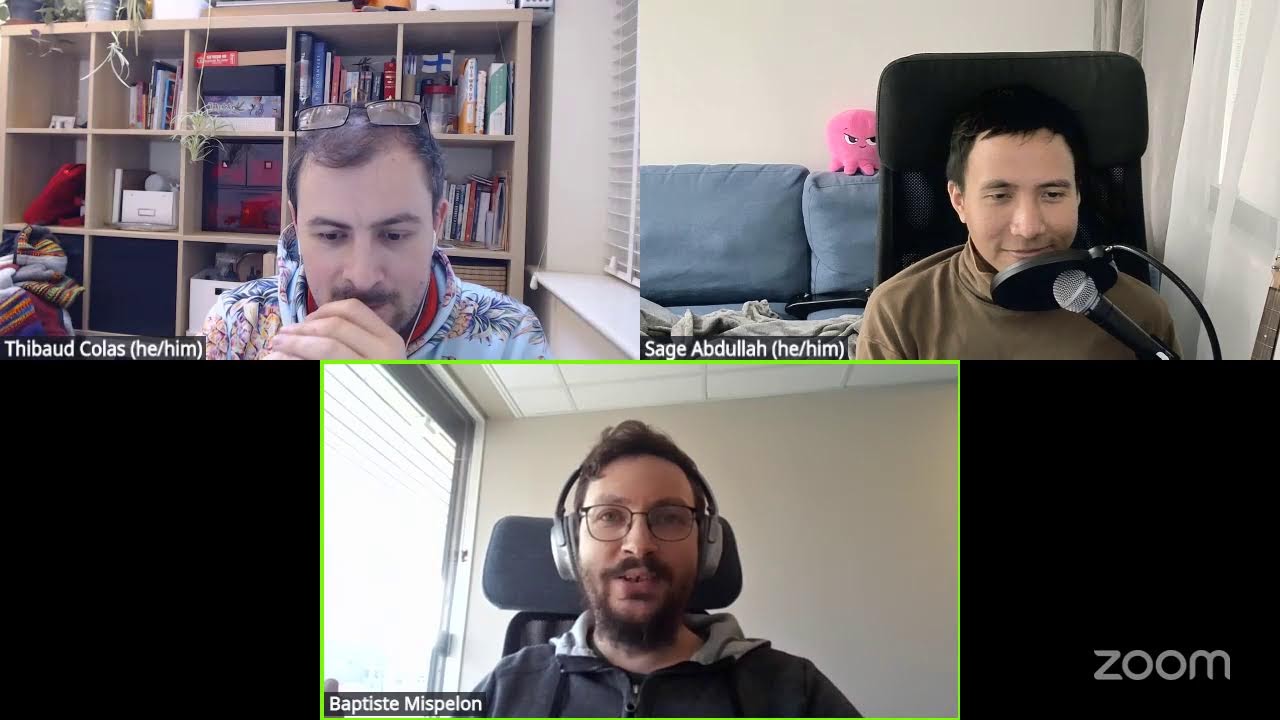
This video features Thibaud Colas at Wagtail Space US 2022 in Cleveland, Ohio, USA.

Thibaud Colas presents Wagtail as a healthy, community-driven project whose value lies not only in its CMS features but also in its support network, accessibility work, multilingual capabilities, and open-source principles. He compares Wagtail’s adoption with Django, Django REST Framework, Strapi, enterprise CMSs, and other projects, arguing that Wagtail should become more useful to Django developers beyond traditional CMS use cases, including as a more user-friendly administrative interface. He also argues that open source is a purposeful and political choice, and highlights initiatives such as Google Summer of Code, Coders of Colour, and the accessibility team as ways to broaden participation and improve the web. Wagtail’s accessibility results are better on average than WordPress and Drupal but still inadequate, while the planned Page Editor 2022 project aims to improve usability, accessibility, multilingual support, and establish a consistent design system.
Summarised automatically from the transcript.
Automatically transcribed, so expect mistakes in names and technical terms.
Speaker 1: Thank you. It's indeed lovely to be here. I was joking on Slack. The last time I took the plane to travel was Right, let's face US 2019. And uh it's great to be back. It's honestly great to see so many people here in person and also so many people online as well. I'll just take a few minutes to set up, just I want to make sure that the screen on your side is as big as it can be and as readable as possible before I get going. All right, I believe we are good to go. So As Don mentioned, I'm Thiba. My pronouns are here. I work at Touchbox as a developer.
Speaker 1: And I'm here to talk about the state of White Tail. This talk is a bit of a staple of White Tail Space Events. It might not be what you're expecting today. I have no idea what you're expecting. I know what I'm doing, which is my own state of wagtail. Honestly, at this stage, I believe the project is just too big and too fast-paced for it to be recapped by a single person. I'm not going to cover the features of WhiteTale too much. This is very much an insider 's talk, a look into how the project runs, where I think the project is headed. And this is very much my own views. I didn't actually check that the talks contents make sense with the core team uh normal employer and uh before i get doing a quick thank you again to vince
Speaker 1: and all of the organizers. It was very risky for us to realize this in person and online at this time. And it's amazing we were able to pull this off. Thank you as well to my partner who is looking after our kids while I get to be here giving this talk. I couldn't do this without her doing that. And um I think the best way to start a state of white tail talk is by looking at the stars and trying to gaze what our future might hold based on the stars. I obviously mean uh GitHub stars. in our case. This chart was shared to me by uh Dan who frequently contributes to our community. It's built with a piece of software called Star History, which I allows you to compare the star
Speaker 1: accounts of different GitHub projects over time. This is obviously a very flawed metric, but I think it's interesting to consider nonetheless in our case. I just noticed that the Zoom UI is in the way of the presentation on our side here, so I'll just take a second to Close that off. So you have to watch me do this. Okay. So Zoom UI on my computer should be good as well. Yes, so GitHub stars, Wagtail is in red, uh the fast paste of the bunch here, the fastest paste of the bunch overtook Doc Django CMS quite a few years from now actually. And this star is this chart, sorry, is very much what we were looking at in the past.
Speaker 1: We'll try and consider today whether it is still relevant and what we need to look at, I suppose, today and in the future. I also want to mention big name users of Wagtail I think it's important to keep in mind that Wacte isn't just for teeny tiny websites for developers. There are lots of people actually using it for much bigger endeavors. This list as well is from 2019. So this has very much been the case that Wattel is a big project from quite a while now. And this list is almost the same in 2022 , except I think literally everyone on the list here isn't just using Wagtail, they are actually also actively engaging with our community. The NHS has developers contributing to Wagtail directly.
Speaker 1: They've sponsored the sprint Google has sponsored a very big feature development project that is currently underway. NASA, I'm not sure if I even need to mention NASA, they are in the room here with us today. Still not sure if I'm allowed to say their names out loud publicly, but they are here and it's lovely to see them. Thank you for the lovely badge as well. Mozilla as well, lots of regular contributions in Wagtail and in the periphery of the project. And governments, not just the UK and US, actually, there are other governments using or considering White Tail that I might not be allowed to mention publicly. There are other big names on this list which support Wagtail and make the project happen. I'm thinking of Twilio , Ugov, and YPR, for example.
Speaker 1: that that uh frequently um sponsor features on the project and just contribute in um other ways as well So the the chart of stars is an interesting one to look at, but my favorite chart of kind of the options for white tail project health. is the number of people actually logged into the Slack on a on a weekly basis. And we can see that this number is kind of stably stable and growing over time. So this is the the top line here of the two on this chart. And I think this is to me a testament that Wattel is a healthy project and not just something that is used here and there by big and small websites. And to me, this is really the crux of the value I see in Wagtail, not just the code, the features, repository, but the actual community around it.
Speaker 1: That means you have a group of people you can go to for support, regardless of whether it's building websites with Wagtail or the periphery of how you build websites with. For example, accessibility is a common uh source of questions on Slack. Back to the stars for now though. These charts and the projects on them is where I think we should be looking. You'll notice at first glance that all of these actually are based Wagtail currently. Wagel is at the very bottom of this chart. At the very top is Django itself. I quite like to consider Django , the project's its popularity as a bit of a ceiling for what Wagtail could reach. Obviously, what
Speaker 1: that could become relevant outside of the Django sphere, but nonetheless, as as things are going right now, things are an interesting one to consider. And there are plenty of uh other lines on this chart that I think are worth diving into a bit more So uh second one from the top on in blue, we have Strapi. You might or might not have heard of Strappy, it's a very popular open source headless CMS. that we see as a direct competitor of Wagtail. Definitely it's not built on Django, so it's not necessarily the same audience, but in terms of where CMS software is heading. we look at projects like Strapi for inspiration and also as a source of uh threats and risks. Um so well worth considering where we are at compared to them. Ghost
Speaker 1: in yellow is another good example in the same respect of a popular open source project that does CMS in a headless way and not. And um yeah, this is very much the competition for us. Um I think it's also interesting to consider things that aren't the competition, such as uh Django REST framework. Back to the Django universe. So on this chart uh DRF is in pink, I believe, and uh not so far up above whacktail, but It's interesting to me that a project like this seems to have so much more traction than Wagtail does. I'm definitely looking at this and wondering why isn't Wagtail as popular as DRF. Sailor , same type of vein. Sailor, which is the green line on this chart, is a very popular e-commerce platform built on top of Django like Wagtail.
Speaker 1: So again, not a competitor with a project, but it's interesting to look at uh their direction and um see how Wagtail compares. So in particular on the technical side. Sailor chose to uh build their CMS, sorry, their e-commerce admin interface as a single-page React application powered by GraphQL, which is quite different from the direction we're taking with Wagtail. So interesting comparisons throughout, and I'll spend a bit more time on some of those comparisons further down the line. And um There are things that are completely missing from this chart which you might have noticed. So WordPress and Drupal, we are obviously looking at them and comparing them to Wagtail, although they are so well established. that uh we are very far from making a dent.
Speaker 1: There are lots of proprietary options as well these days. So the one that comes come to mind for me is craft CMS which is a bootstrapped uh CMS by company built on PHP and um bigger names like Contentful Sanity and Adobe AEM. To me, it's very interesting to consider this not just as a competition between features on different platforms, but also how the projects actually run. Strapy has received 14 million in funding. This is quite big and in some ways threatening compared to Wagtail, which is uh Very much a community effort. Can anyone in the room here guess how much funding Contentful has had over the years? Does anyone happen to know the number or the scale?
Speaker 1: Ten million? They've they've received three hundred and thirty-five million of venture capital funding and they are valued at $3 billion. Just imagine when you're comparing different options for your CMS. You have Wattel on one side, then you have a piece of software that's valued at 3 billion on the other. And just imagine as well. the amount of day-to-day investments they put into those projects features and the marketing and so on. And that's the kind of thing where um even though it might feel like a daunting comparison on numbers alone, we definitely want Wacte to stay competitive with those projects, not just on the feature set again, but also just uh um how healthy our community is
Speaker 1: And yeah, day to day at Toschbox, we have clients coming to us and saying, oh, I'm considering white fail or this project that has a 10K a month licensing fee. And that's the kind of uh theme we have to we have to keep in mind when we uh I guess set the direction of rectale Um, so the that's kind of one half of what this chart tells me, which is competitors in the CMS space. And the other half, I think that's quite interesting to look at, is our our place in the Django world. So again, same charts Django REST framework, not really a competitor to Bagtail by any means, but if we look at the results of the recent uh Django developers survey. It's quite interesting to me that Django Rise Framework is the most popular package, according to the respondents to that survey.
Speaker 1: Can anyone see Wagtail on this list? No, you can't. White tail is further down below if we scroll quite a bit more all the way at um 6%. So 6% of respondents to the survey said Wachtel was in their top five favorite packages I have no idea why it's solo. Honestly, does anyone know? I don't know. I think the Wacker community is very supportive. And I think in terms of features, it's very finitely relevant to lots of websites, no matter exactly what they are building. So to me, this is where we should be looking, wondering. Why is Wagtail so long on that chat right now and perhaps what we could do to make sure that Wagtail is relevant to more people that are already invested into the Django
Speaker 1: open source ecosystem? And to be honest, I don't think it's that hard either. If you ask those same people what part of Django they like the most. Lots of them say a Django admin. That's on a list of the contrib apps. And if you ask which which favorite core components as well, the Django admin comes second. And I mean to me the Django admin definitely could use some improvements and the Wagtail admin uh strikes me as already much more user-friendly. Obviously it doesn't have the exact same features and uh for some projects the Django admin just make much more sense. But if I think of the direction of Wagtail, I definitely see it as a project. that could overtake some of the features that people rely on the Django admin
Speaker 1: for. And consequently, we could just help grow Wagtail as a project. um this way just by make making it um interesting to use even if you don't rely as much on the kind of CMS feature set And obviously it's not a zero-sum game either. It's not because we develop our own alternative administration interface that we can't feed some of that back into Django core. So to me, if I think of the value of Wagtail for those Django developers, I think of this more opinionated baseline on how to build websites. and the admin interface, obviously, and the accessibility, which is an ongoing focus area for us, and our multilingual
Speaker 1: support with translations. I believe we probably have by now one of the most well packaged. uh multilingual content setups of all of the Django ecosystem and obviously the community And um I think it's interesting to go beyond Django a bit and consider our place, not just within that sphere of our industry, but also in the whole of the open source universe. This takes a bit of unpacking. Again, you have to keep in mind that in my mind, I'm not competing competing just with other open source projects and CMSs. but also with people who have venture capital and essentially see feature development and project development
Speaker 1: with a completely different business model So Mozilla, them again, has done some excellent research on this. They have written a report that initially was only meant to be an internal tool for them. This report is titled Open Source Archetypes, a Framework for Purposeful Open Source, where they look at different models of how open source projects work. And I think it's very interesting for Wackel to consider this. and figure out which of those archetypes we match to. And to me, one of the most important words here is purposeful. This idea we're not doing Wagtail as an open source project just because it's what leads us to having the most growth We're not trying to uh replace the Django admin just because we want more users.
Speaker 1: We're actually doing those things. And the way we're doing those things is because we believe that uh it's part of what what what the project uh delivers. I guess it it's our attempts at making the world a better place with this little piece of software And there are lots of companies that don't believe in this at all that will just use open source as a vector to grow their user base. And I don't think it's the case of Wagtail at all. We build a project in this way because we believe it's the right thing to do for the health, for the benefit of our developer community and of the end users. So yeah, definitely not the most eloquent summary of that report. I'd highly recommend you take a look at it on your own time.
Speaker 1: Furthering from that thought, to me it's very important for us to remember that this choice of open source of free and open source software, I believe is the uh official term. This choice is not apolitical. I often hear people asking us as a community, why white cloud does why does Wikel take a stance on X or Y? political issue. We definitely don't have a political affiliation, but we do have political opinions and choosing open source is one of the most fundamental ones. And again, I'm definitely not the most eloquent speaker about those topics. So I'd very much recommend you read this article that's linked to at the very bottom here called Building the Walk Web.
Speaker 1: I think it's important to consider as well that this doesn't just stop at how the project runs, but actually also which features we choose to build or not to build. So the one that always comes back to mind for me is Accessibility, how much of a focus we have on this. This has a direct connection to whether our software is inclusive or exclusive to the people who rely on accessibility features to be able to use Wagtail. And I think it's important as well, some people do consider Wacker to be apolitical. open source in general to be apolitical as well. That's completely fine by me. It's just as a community we get to choose exactly how the project is run and what we might want or not want to take a stance on.
Speaker 1: And again, I'm not the most eloquent speaker to talk about this extensively. So I thought the simplest way potentially before is to consider recent examples of how we go about this. And there is no better example than the banner we currently have on wetal. org, which states our support of the people of Ukraine. Again, I'm by no means feeling equipped to discuss this as a talk, as a tech talk. So I'll just leave this there and say this is important to us. And personally, it's very important to me that we do take a stance on those things. Obviously, we're not going to fix some of those issues just by having an open source protocol on the internet take a stance on those things, but it's important for us to show solidarity.
Speaker 1: for the people affected by this and potentially go much further than solidarity in the cases where we can do that. And again, more recent examples. Don already mentioned Wacta Live, which is a project by Tidian Tidian Now works at Touchbox as a Wartel consultant and he's there because of Google Summer of Code. which is again a project that Google made happen where they finance students to work on open source over the summer. I can't think of a better way for us to shape the future of our industry than participating in projects like these, working with people like Tilian to help them kickstart their careers.
Speaker 1: And yeah, Tijan is amazing. I'm really happy we managed to find him through this. I'm really happy he works on Wagtail within Sumero Code and that he chose to keep on contributing afterwards And it wasn't just Ilian, so Al Dan as well gave uh an excellent talk at uh last DjangoCon event in Spanish. for the Spanish speakers in the room. And similarly, Tidian, after his Google Summer of Code Student Project, went on to kickstart his career. And I believe he's considering an internship right now at a very prestigious uh Fang company which uh he might tell us more about later on. And this is happening again this year. Um We
Speaker 1: got selected to participate as Wagtail. Last year it was within the Django umbrella. We are looking for five contributors to work with us on core Wagtail features. These aren't pet projects, these are central parts of Wagtails value proposition. And um I think it's also very interesting because this year Google chose to open up Google Seminar Code to all newcomers to open source, not just students. Which allows us to work with people who might not have the privilege of being students and who might just need a way to kickstart their industry career. So definitely something to consider being involved with. Another example in the same vein is uh coders of color.
Speaker 1: So this is um an NGO in the UK who simply runs tech workshops for people interested in getting into tech as a career. And they chose to run those workshops with Wagtail. You might have heard of Django Girls in the past. This is very similar. And they happen to be using Wagtail because one of the Touchbox employees, Kevin, was involved with them very early and created this Wagtail curriculum for people to learn how to use Wagtail and build websites with the exact same tools that you might be using on your jobs. And to me, this is exactly the type of initiative I want us to support as a community. And this is the best way for our industry to solve our diversity issues and have more people included.
Speaker 1: I want to illustrate this as well with practical examples of the sites they've built. So that the all of those sites were built for charities in the UK. They're obviously not intended to be production ready from the get-go , but Yeah, I think they are well worth a look. And finally My favorite example of the political nature of open source is obviously accessibility and how we could do more as an industry to include more people. So You might have seen this number that I often share on my presentations here and there. 97. 4%. That's how many of the world's top 1,000 home pages? have basic accessibility issues
Speaker 1: according to a yearly study called the Web I'm Million. This is a very frightening number to me, but it's also a very clear call to action for us. And usually when I share this number, Next thing I share right after is this lovely table which breaks down this number between different technologies, different CMSs in this case. So we can see from this table, for example, that on average, at least, sites built with Squarespace have fewer issues than sites built with, say, WordPress. And when I see this table, I'm always left to wonder, well, where would Whitehead score if it was on that chart? Oh gee, only there was a way to figure it out.
Speaker 1: So take a guess. If you had to if you had the luxury to look at the top Say the top 1000 white tail homepages. Can anyone in the room tell me like their estimates of how many of those 1000 home pages would have accessibility issues on the homepage? Is it like 50%? 80% you said that's that's uh I think that's an optimistic guess. Any more pessimistic or pessimistic takes? 7. 3 %. That would be a lovely number. I would take that. I would I would gladly take that. I have I have some elements of an answer and it's not as good, unfortunately.
Speaker 1: The number I got out of my little own study is 99. 3%, which really isn't the picture I would like to leave you with today. My studies methodology is based on a sample of 468 sites that are made with wagtail. and i use different tools as well from the web i'm million so those numbers aren't necessarily comparable one to the other but nonetheless This isn't good enough in my opinion. And this is something I'd like to see us keeping track of. And maybe at 2023 set of quite tail, we can see that number go down. It's not necessarily as bad as I make it sound though, because the average per homepage was uh 41 issues
Speaker 1: which if we come back to this table is lower than say WordPress or Drupal. So again, on average, we're doing better than WordPress and Drupal. I managed to find the free websites that's called a perfect zero issues detected. And uh there might be some names on here you recognize. There are also lots of websites that only have a single issue on the homepage. So it's not that big of a picture. But again, nonetheless, I think this is a very good illustration of the impact of our technology and uh open source community choices on how the web works for people out there. And it's definitely not hopeless. I think it's the most important thing to remember.
Speaker 1: And I think what I'd like to leave you with today is just a list of the different ways uh you in this room or you online on zoom can get involved with uh whacktail and help um yeah help shift those metrics, help help push push what we can do with Wagtail and help push what the industry does for those causes. So give a lightning talk. That's very obvious. You already know this. Google Summer of Code, again, I want to reiterate this year they make it open not just to students, but anyone who's new to open source. I can't think of a better way for someone who's unemployed to get going within our industry. Coders of color, always looking for workshops and donations. Wagtail accessibility team, which I'm a part of.
Speaker 1: um currently looking for new members. And finally, I think it's worth mentioning the one feature I I thought would be worth highlighting, which is the page editor 2022 project sponsored by Google, where we're hoping to tackle some of the activity issues for bacteria in particular. Thank you for being here and Yeah, thank you all. It's a pleasure to work in this community and I'm really hoping we get to work on some of those things, some of those uh societal issues together. Questions. Questions please.
Speaker 1: Yes, please. Can you say that again? Sorry. Yes. We are taking questions on Zoom. I am on the Zoom chat right now asking for questions and looking at their questions.
Speaker 2: I was wondering if you could tell us more about that A Gender 2022 project.
Speaker 1: Oh thank you for the prompt team. So team asks for more information about the page editor 2 project. So I forgot to mention earlier, but um The slides are available and all of the links within those slides are real links, which I'd highly recommend you check out. I'm not sure this is looking as I was expecting and I have a bit of a hard time looking over there. But this is a project that first of all we run in the open compared to some of our past sponsorships Where we take active feedback from the community, there's a thread on GitHub discussions that you should look at and attribute to. This is a page editor redesign and reinvention projects sponsored by Google. They were very generous to
Speaker 1: give us their sponsorship as a bit of a carte blanche situation. Just do your thing and make Quaker better We are going to reinvent how the page editor UI, which is the most important UI of RightTale, how it works and what features it has. We are building long overdue UX improvements. We are building authority activity tests within the page editor. We are building also save within the page editor. And as we go through this, we are also making sure that uh the actual results of this UX is a proper design system that we can then move on to applying to all the other parts of BrackTel very consistently and um the methodology that we use to go around this uh allows us to also give much better support for um
Speaker 1: but then in other languages, so multilingual support, not just other content, but also the admin interface. So yes, please do feedback on this project. Um so we do research for extra solutions , that's kind of what it should call the first autonomy. That's an excellent question. So uh in my research, which yes, which uh in my research, which issues were the most common and did I keep track of that? So um This number only tells you part of the story. The problem with those numbers is that they come from automated tests, which only show you part of the picture.
Speaker 1: So depending on who you ask. Automatic tests allow you to find between 30 and 80% of the issues on a given page. So it's a very partial picture to start with. The most common issue by far is color contrast. And that's also the issue that's the least useful to look at because in a lot of those cases People can make the test taste text bigger anyway, and it's also very easy to change the color contrast of an element of a site with CSS. So it's more of a design problem. There are a lot of common issues that are much more specific to Wagtail, like uh missing all the text, all the text that's not very helpful. And um The only other thing that's worth hiding, I think, is a class of issues that doesn't appear at all in those results, which is keyboard support that's completely missing from automated tests.
Speaker 1: So there are patterns. I can definitely share more patterns after this talk. In the Whitehead docs, we have an excellent page that details all the types of issues that come from Whitehead in particular, which I recommend looking at. Hope that helps. Is
Speaker 3: there to be there on the expectation? So it provides no flexibility. What extra that provides what it has to hold
Speaker 1: um Yes, is it fair to compare Wagtail's homepage accessibility with those of other CMSs like WordPress or Drupal that provide templates? Yes, that's um that's not fair. That's not fair at all. That's comparing apples and oranges. Uh definitely with Wagtail, since you own the templates as a Wagtail implementer you have much more freedom to make them as accessible as you want them to be. But nonetheless, there are definitely CMS features that have a direct uh linked to access issues. So the most common one by far is alt text because Wagtail's alt text support isn't very good at all.
Speaker 1: Currently, alt text just comes from a title field in the CMS and there is no indication to CMS users that WACTA that alt text does come from there. So even though it's not fair, I think it's uh nonetheless good for us to have a look at within those 40 issues on average which ones might be coming straight from the CMS. And again it's not just CMS features. A project that has excellent uh stats within this study is Gatsby. And similarly, Gatsby doesn't actually mandate how you go about making your theme. The reason numbers are so low for Gatsby is because they have quite a consistent. community level approach accessibility and they make sure that all of the themes they advertise on their websites are tested for accessibility issues.
Speaker 1: They make sure that common considerations are well documented. So it's not just themes uh between different projects. Any other questions?
Speaker 2: I think there was one on the Zoom chat.
Speaker 1: Zoom chat. Yeah, conference one uh for a problem , something number, uh wherever which country has the load layers We have excellent stats on this, which I'll be very happy to share after the talk. I believe country number one is the US. I believe this might simply be the fact that there are lots of people in the US, lots of developers. Wacter is also very popular in China, as I recall. in um Russia, in the UK, in Germany. Wax is popular all over the world, I think what's
Speaker 1: Personally, I like to consider when I consider like how to improve the reach of Wagtail is our support for different languages. So that's something that I believe we might not be doing as well as we could be at the moment. Um a very practical example is uh German. Germans have the chance to have a language that's much longer per word than English, and we have to uh take some special effort to make sure that the admin UI works well in that language. Another very straightforward example is support for right to left languages like Arabic, Hebrew, or Farsi. Those aren't supported at all in the CMS right now, which really hinders adoption uh in those countries. I hope that helps.
Speaker 2: Len from Germany pass one. Thank you for that. addressing Germany.
Speaker 1: Yes, we definitely want more people from Germany involved with Wagtails so that they can tell us which worlds exactly are the worst offenders.
He describes Wagtail as an opinionated way to build websites, with a user-friendly admin, accessibility work, strong multilingual support, and an active community. He also sees it potentially taking over some capabilities people currently rely on in Django’s admin.
Discussed at 11:47In his sample of 468 Wagtail sites, 99.3% had at least one detected accessibility issue, averaging 41 issues per homepage. The average was still lower than WordPress or Drupal, and the figures are not directly comparable because the testing methods differ.
Discussed at 23:43He recommends giving a lightning talk, joining Google Summer of Code, supporting or volunteering with Coders of Colour, and joining the Wagtail accessibility team. He also invites people to contribute feedback to the Page Editor 2022 project.
Discussed at 25:18It is a Google-sponsored redesign of Wagtail’s page editor, developed openly with community feedback. It aims to improve the editor’s UX and accessibility, add autosave, establish a consistent design system, and improve multilingual support in the admin interface.
Discussed at 27:38Automated tests most often find color-contrast problems, though those tests only detect roughly 30–80% of issues. Wagtail-specific concerns include unhelpful or missing alt text, while keyboard support problems generally are not detected by automated testing.
Discussed at 29:10Not directly: Wagtail implementers control their own templates and have more freedom to make them accessible, so the comparison is like comparing different things. Still, CMS features can contribute to problems—for example, Wagtail’s current alt-text workflow derives text from an image title without clearly explaining that to editors.
Discussed at 31:21Note: We understand that names change, people change, and bodies change. We respect each individual's journey and privacy. If you have any concerns about a video or need us to remove content, please don't hesitate to contact us. We will handle your request with care and promptly address any issues.

Published July 19, 2024

Published July 19, 2024

Published July 19, 2024

Published July 19, 2024

Published July 19, 2024

Published July 19, 2024